How long does GEO take to show results?
In short
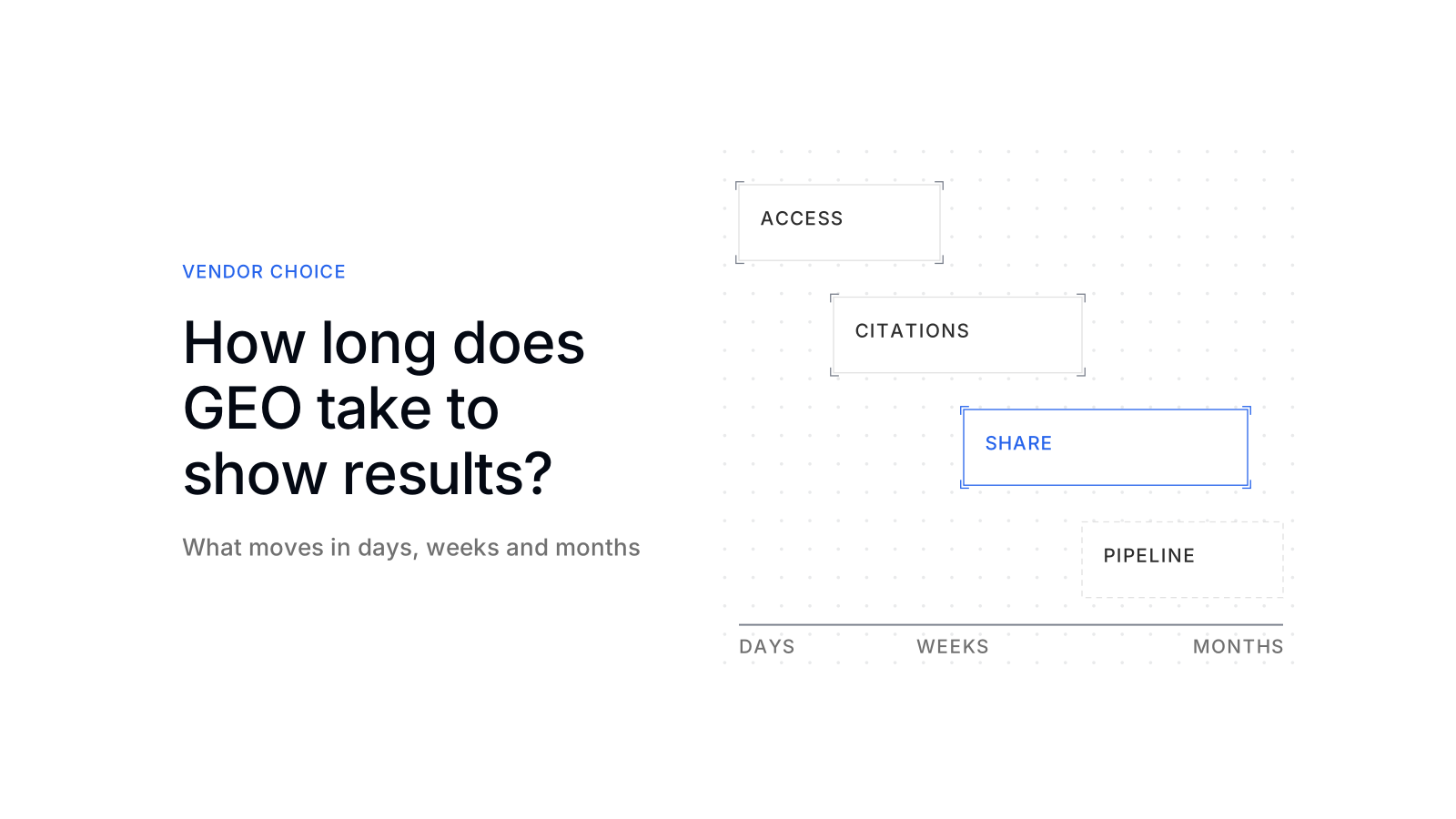
GEO shows results in layers: crawlers see changes within days to weeks, new pages can be cited within weeks, and your share of AI answers moves over months. scaile does Managed GEO and measures each layer against a first-week baseline.

Dora is a founding engineer at scaile. She studied computer science, psychology and neuroscience at TUM, which is the perfect fit for GEO: she has a deep understanding of technology and of the human side, and knows how to write and produce content that leads humans to buy and AI to show you in its answers.
Key takeaways
Ask what should have moved by now, not when GEO works. Access, first citations, share of answers and pipeline each have their own clock.
Crawlers need about a day to a few weeks to pick up a change. That is the floor, not the result.
On scaile accounts, one new guide was cited within weeks, and AI mentions or the share of answers rose over two to five months.
Three months is enough to judge the work and the first citations. It is often too early to judge the share of answers.
If nothing has moved by month three, check access, indexing, prompts, content and measurement, in that order.
How long does GEO take to show results?
Generative engine optimization (GEO) has no single date when it starts working. It shows results in layers, and each layer runs on its own clock. Crawlers see a change within days to weeks. A new page can be cited within weeks. The share of AI answers that name you moves over months. Pipeline follows your sales cycle.
So “how long does GEO take” is really four questions. Anyone who gives you one number for all of them is guessing, and anyone who guarantees a date is promising something AI answers do not allow. What you can ask for is a baseline, a list of what should move first, and a report that shows each layer against that baseline.
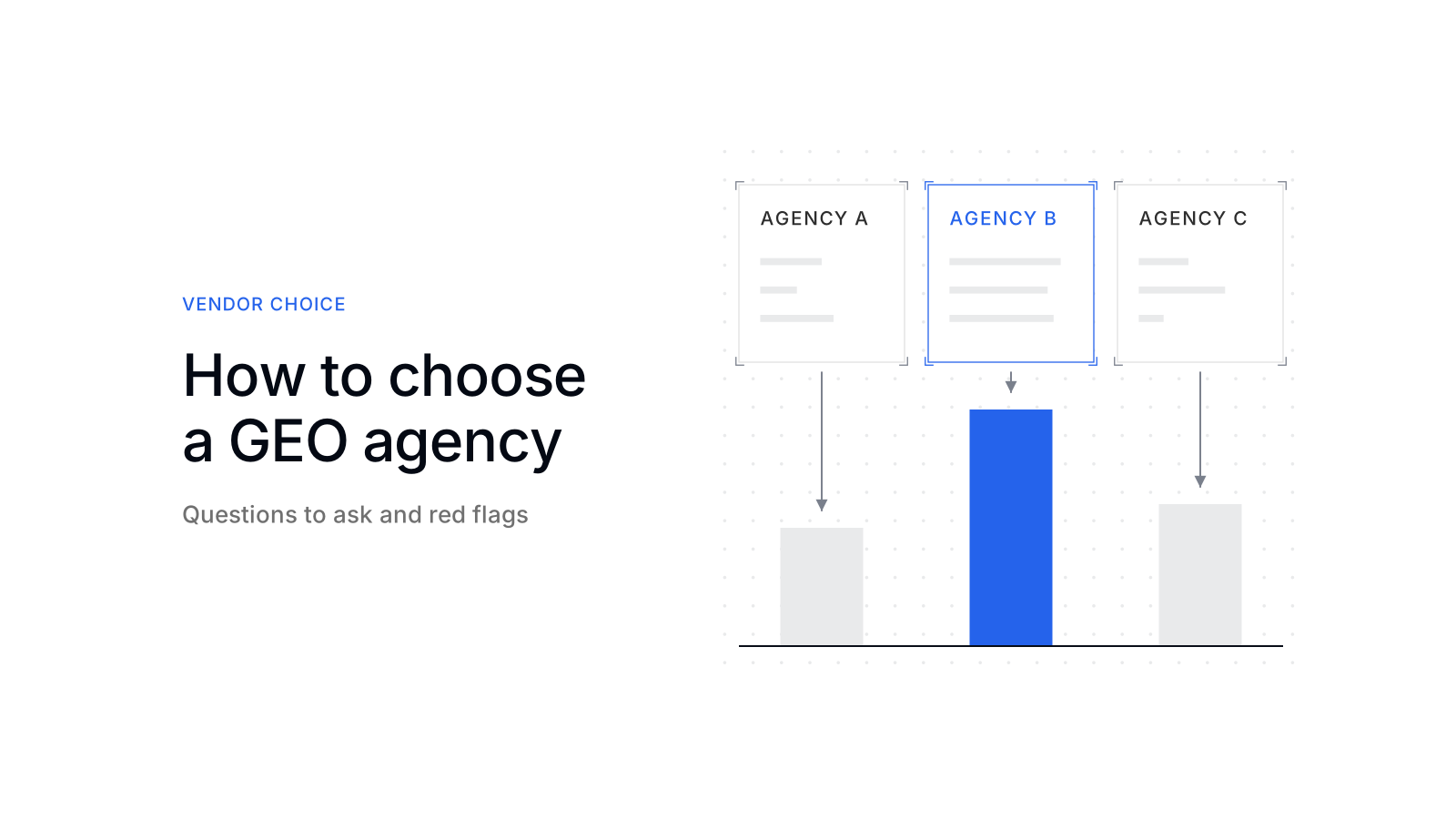
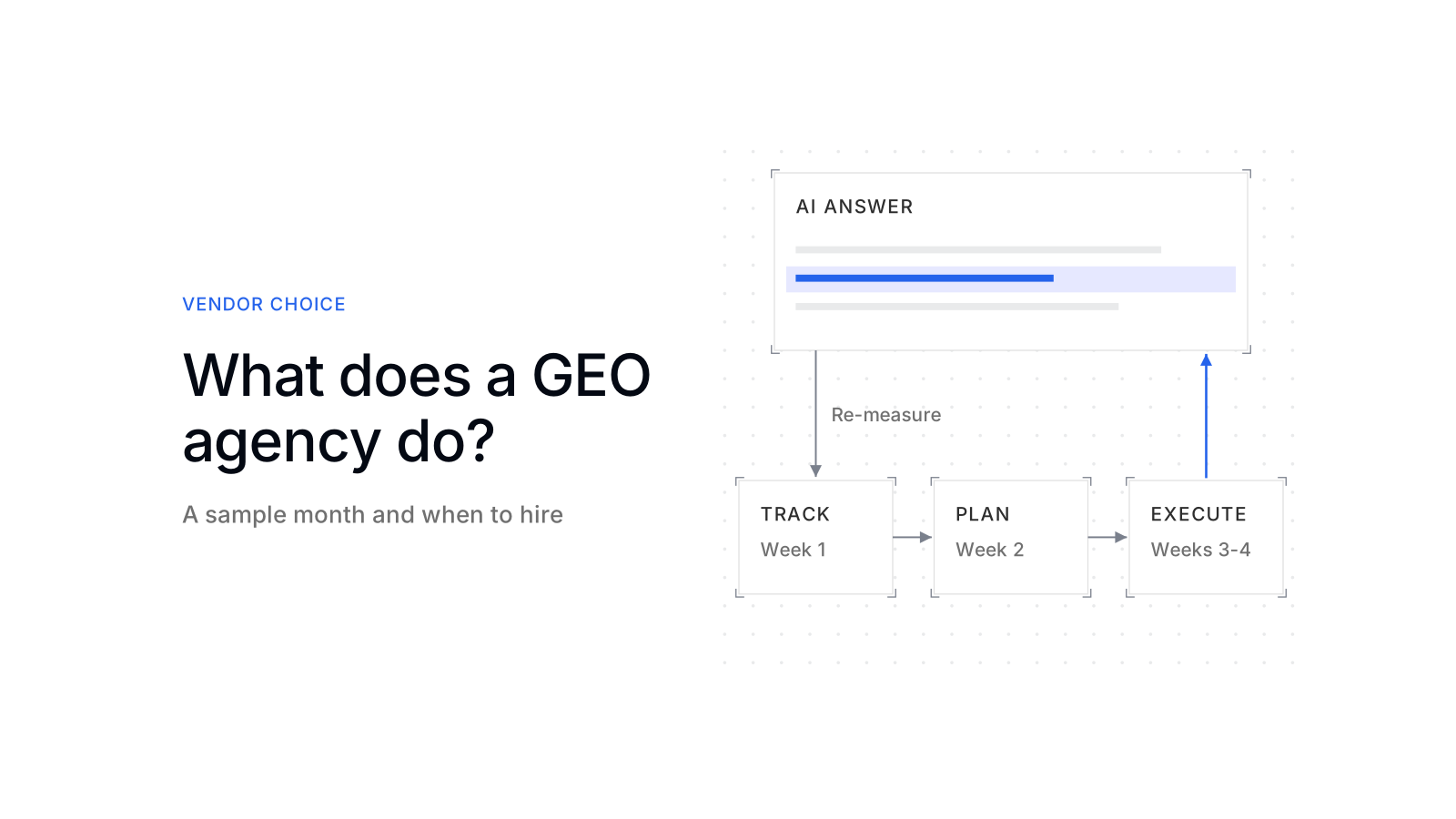
Buyers ask it in sales calls, often as “Is a three-month test period enough?”. This article answers both. Choosing the agency is covered in how to choose a GEO agency, and a normal agency month in what a GEO agency does.
What moves first, and what takes months
The first layer is access. An AI assistant can only cite a page its systems can reach. OpenAI says OAI-SearchBot is the crawler that surfaces websites in ChatGPT search, and that its systems need about 24 hours to adjust after a robots.txt change. [1] Google says crawling “can take anywhere from a few days to a few weeks”, and that asking for a recrawl does not guarantee inclusion at all. [2] For Bing and other engines, IndexNow reports new and changed pages as soon as you publish them. [3] How to check access is covered in AI crawler access.
The second layer is the first citation of a new page. Once a page is crawled, an AI answer can start to use it for the question it answers. Classic rankings are slower. In an Ahrefs sample, only 1.74% of newly published pages ranked in Google’s top 10 within a year, and the average number-one page was 5 years old. [4] On one scaile account below, a new guide was cited within weeks of going live, long before a new page usually climbs that far.
The third layer is your share of AI answers across a fixed set of buyer questions. It moves more slowly, because it needs many pages, each answering one question better than what the assistant used before. The paper that named GEO measured up to 40% more visibility in generative engine responses from changing what a page says and how. It also found that the effect “varies across domains”. [5] Your category sets the pace as much as your agency does.
The fourth layer is pipeline. It comes last and depends on how long your buyers take to decide.

What three client timelines show
Three scaile case studies carry dates, so they show how the layers played out on real accounts. They are observed timings on single accounts, not a promise.

At Braun & Kollegen, a Munich law firm, Copilot citations stayed close to zero until July 2026 and rose from August to between 70 and 300 a day in September. One guide, live since 3 August, was cited 265 times by Copilot in its first seven weeks. That is the second layer arriving within weeks of publication.
At Beurer, the buying questions are tracked daily on five AI engines from 28 April. In May, AI answers used beurer.com in 17% of their answers, ninth among all websites. In September, they used it in 42%, more than any other website. That is the third layer, and it moved over five months.
At BILD Reisen, articles went live from 26 May to 31 July 2026. In 11 weeks the travel hub reached three times the AI mentions for booking questions, with a similar effect in classic search.
The pattern is the same on all three. The setup and the baseline came first, and the visible rise followed within months, not weeks.
Is three months enough to judge a GEO agency?
Three months is enough to judge whether the agency does the work and whether the first two layers respond. It is often too early to judge your share of AI answers. scaile’s own report page says that solid conclusions from classic SEO take about three months too.
A baseline on your buyer questions, a prompt list you agreed on, pages live and crawled, first citations of new pages and the direction of your share
A stable share of AI answers across all your questions, or pipeline from buyers with a long decision cycle
So use a three-month test to judge the work, not the final number. At the end of month three you should be able to see every page that was changed, when it went live and which prompts it targets. You should also see whether those pages are cited yet. If an agency cannot show you that, the problem is not the timeline.
scaile agreements run for a minimum of six months. The first three months build the baseline, the first pages and the first citations; the second three show whether the share of answers follows.
What to check if nothing has moved by month three
If the baseline has not moved after three months, work through the layers in order. Each check rules out a cause before you blame the content.
- 1Access
Check that your robots.txt lets AI crawlers such as OAI-SearchBot through, and that your pages render without scripts blocking them.
Your partAsk your agency for the robots.txt check and the result - 2Indexing
Check that the new pages are indexed. In Google, inspect the URL and request a recrawl; for Bing, send it with IndexNow.
Your partPick five new pages and check them yourself - 3Prompts
Check that the tracked prompts are the questions your buyers ask right before they choose. A prompt list built on the wrong questions measures the wrong thing.
Your partCompare the list with what your sales team hears - 4Content
Check that each page answers its question completely, with sources, better than the pages the assistants cite today.
Your partRead one competitor page that is cited for each prompt - 5Measurement
Check that visibility is a share across many runs, not one screenshot. Answers vary from run to run.
Your partAsk how often each prompt runs and on which assistants
The guide on which prompts to track helps with step three, and a good AI visibility score explains step five.
GEO takes days to reach the crawlers, weeks to bring the first citations and months to move your share of AI answers. Judge each layer at its own time, against a baseline you recorded before the work began. If you want to know where you stand before the clock starts, talk to scaile about Strategy with you.
FAQ
Does a technical fix alone show results in AI search?
It removes a barrier, so the next crawl can see your pages. Whether an assistant then cites you depends on whether a page answers the buyer’s question well.
What should a GEO agency report in the first month?
A baseline on the agreed buyer questions, the prompt list, the pages planned or changed, and what each change is meant to move.
Do GEO results last once they show?
Only while the pages stay current. Competitors publish too, and assistants keep picking what answers the question best, so refreshes are part of the work.