What is managed GEO? Who does the work, and when it fits
In short
Managed GEO is generative engine optimization run as an ongoing service: the provider finds buyer questions, tracks answers and changes your pages. scaile defines it as an agency's personal service plus its own software and analytics, all visible to you.

Dora is a founding engineer at scaile. She studied computer science, psychology and neuroscience at TUM, which is the perfect fit for GEO: she has a deep understanding of technology and of the human side, and knows how to write and produce content that leads humans to buy and AI to show you in its answers.
Key takeaways
Managed GEO means one provider does the monthly work that gets your brand named in ChatGPT, Gemini, Perplexity and Google's AI answers.
The test is simple: if you still have to make the changes on your website yourself, the service is not managed.
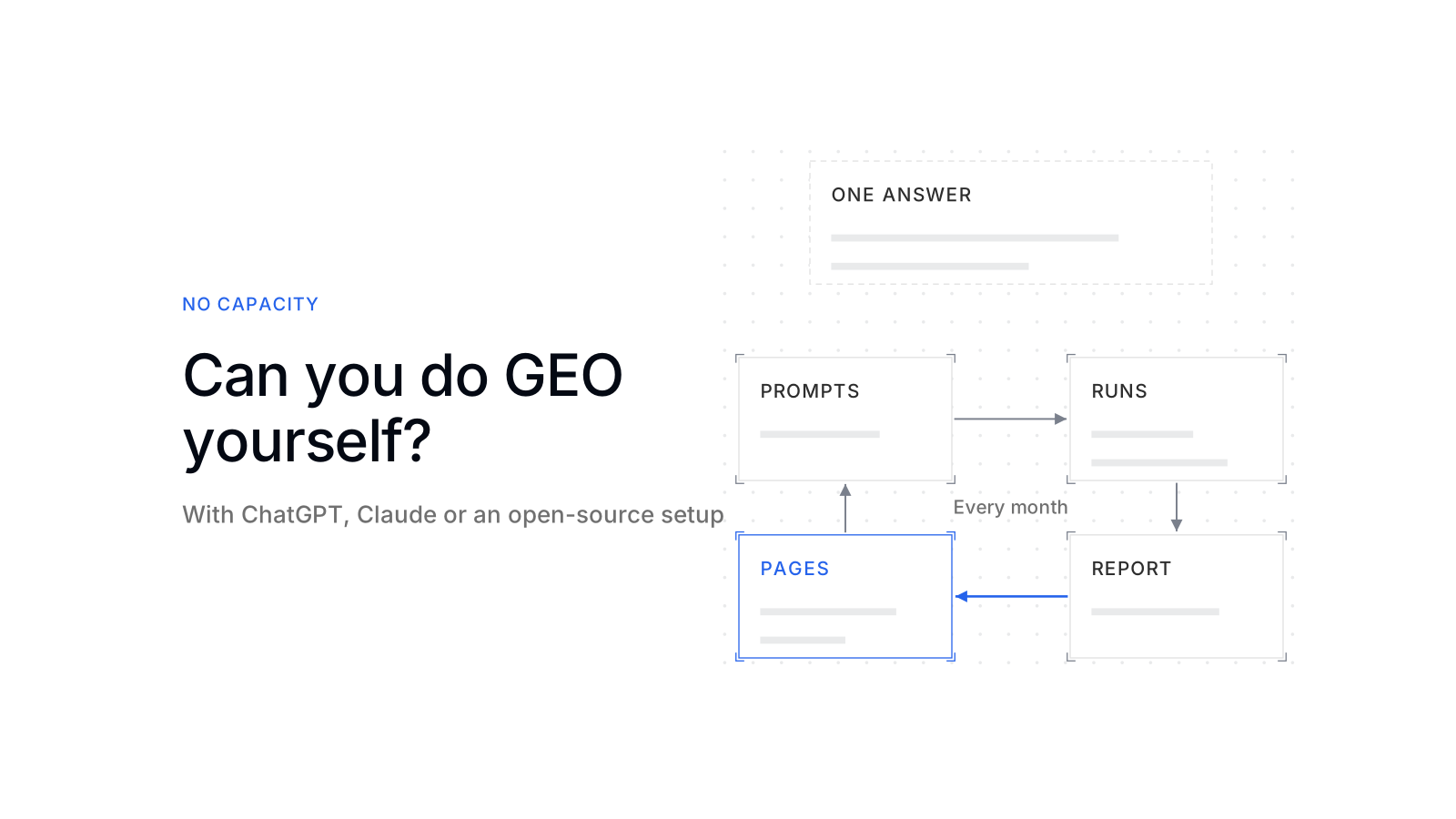
AI assistants give a different list of brands almost every time you ask, so the work has to be measured over many runs and repeated, not done once.
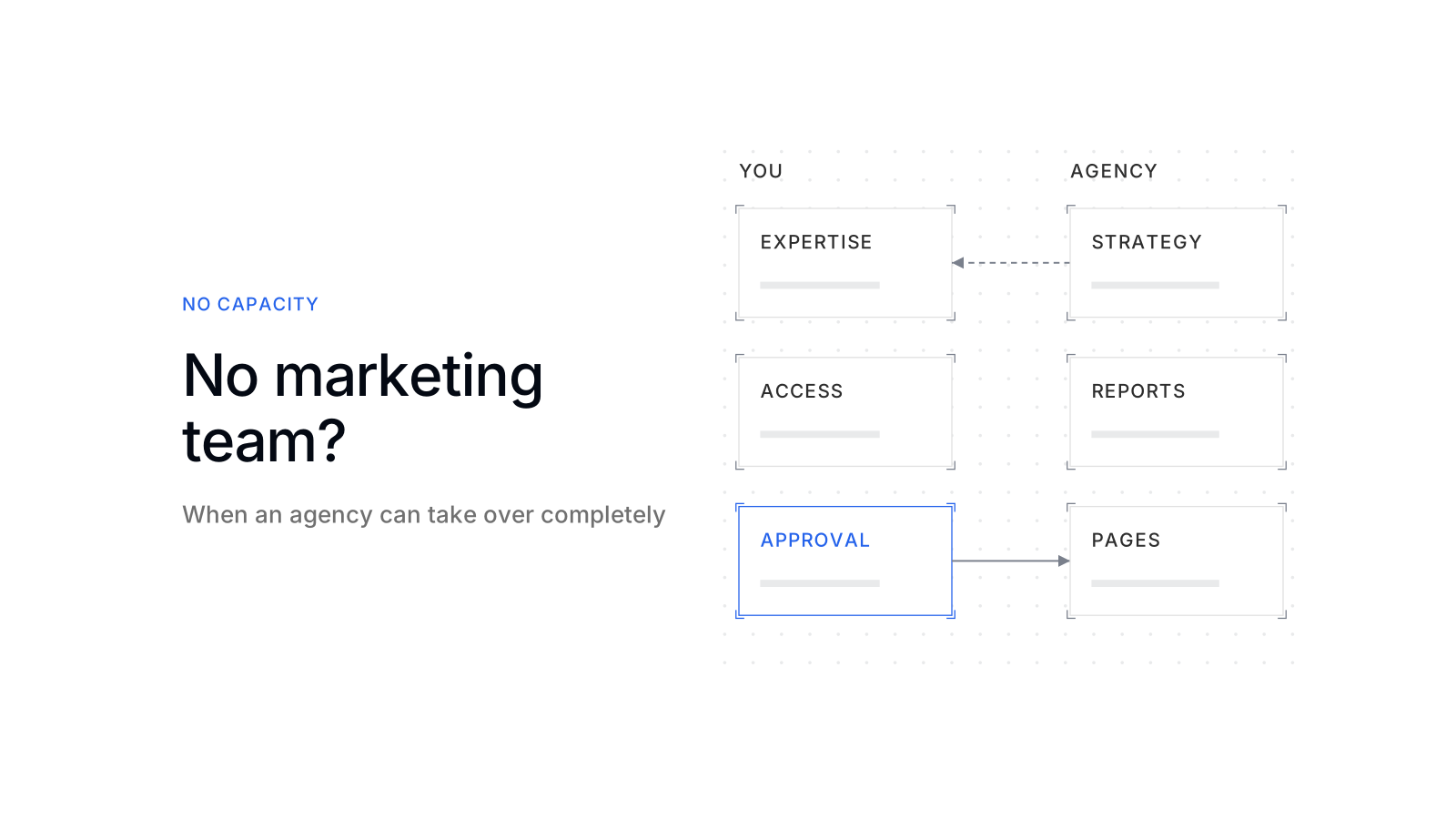
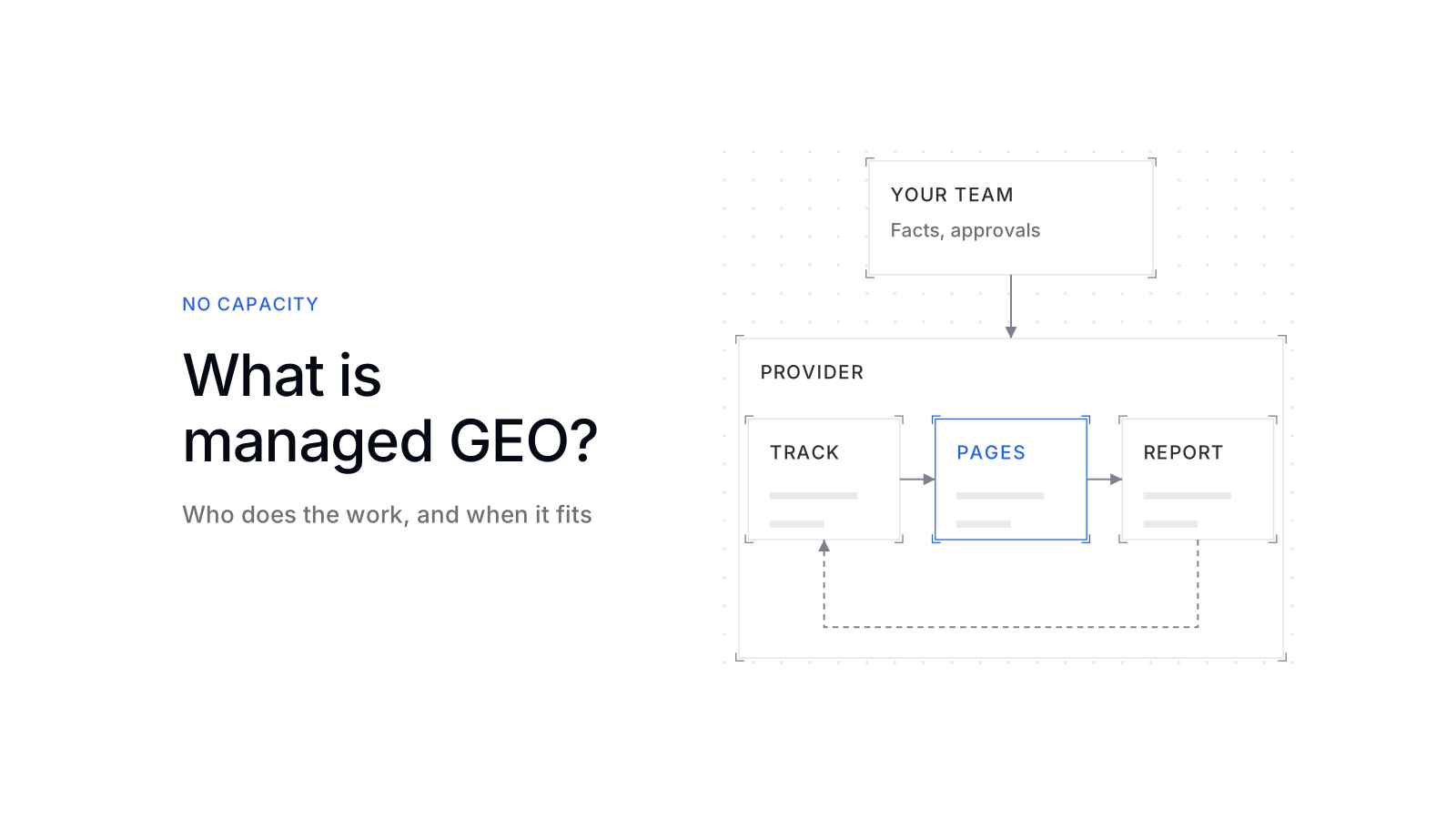
Your team stays in charge of the facts and gives the approvals. The provider does the research, writing, publishing, updates and reporting.
A tracking tool only shows where you stand. It fits a team that already has people to act on the numbers.
What is managed GEO?
Managed GEO is generative engine optimization (GEO) delivered as an ongoing service, where one provider owns the work and does it. GEO itself is the practice of making your content visible in the answers that AI search systems write. The research paper that named it describes GEO as a way to help content creators improve their visibility in generative engine responses. [1] “Managed” describes who carries the work: the provider runs it every month, with its own software, and you see what it does.
In practice, the provider finds the questions your buyers ask AI assistants and tracks how ChatGPT, Gemini, Perplexity, Claude and Google AI Overviews answer them. It decides which questions to win, writes and changes the pages that answer them, keeps them current and reports the effect. Your team supplies what only it knows: the product facts, the customers, the approvals.
The word separates two offers often sold under one label. One hands you a report with recommendations. The other makes the changes. Only the second is managed.
Why GEO needs ongoing management, not a one-off project
GEO needs ongoing management because AI answers change from one run to the next, and the engines keep choosing new pages. In SparkToro’s study, 600 volunteers ran 12 prompts through ChatGPT, Claude and Google’s AI a combined 2,961 times. [2] There was less than a 1 in 100 chance that ChatGPT or Google’s AI, asked 100 times, would return the same list of brands in any two responses. [2]
The same study found a signal in the noise. How often a brand appears across dozens or hundreds of runs of one question shows which brands the system links to a good answer. Its author advises asking the same question at least 60 to 100 times and averaging the results. [2] One screenshot of one answer proves nothing. A share of answers, measured week after week, does.

The pages behind the answers move too. Google says AI Overviews and AI Mode may use a “query fan-out” technique, issuing multiple related searches across subtopics and data sources to build one response. [3] Every new comparison page, review or competitor article can enter that set. The GEO paper adds that what works differs by field: its methods raised visibility by up to 40% in generative engine responses, with effects that varied across domains. [1] A project that optimizes ten pages once is outdated within months. A managed service measures, changes and measures again.
What a managed GEO service includes
A managed GEO service covers the whole cycle, from the first question list to the monthly report. Here is the order the work runs in, and what your team does at each step:
- 1Understand the offer
The provider writes down what you sell, for whom and how you differ, so every page says it the same way.
Your partProduct facts, customers, what sets you apart - 2Find the buyer questions
Research the questions buyers ask AI assistants right before they choose a provider, including the related searches the engines run behind them.
Your partSales and support questions you hear often - 3Track the answers
Ask those questions across the answer engines, many times, and record who is named, in which tone, and which pages are cited.
Your partNone - 4Change the pages
Write new pages and rework existing ones so they answer the questions directly, with sources, and publish them into your CMS.
Your partReview and approve - 5Refresh
Update pages when facts, prices or answers change, under the same URL.
Your partApprove changes to facts - 6Report
Show AI visibility next to organic search and traffic, and say what comes next.
Your partRead the report, set priorities
The groundwork is classic SEO. Google says there are no additional requirements to appear in AI Overviews or AI Mode, and SEO best practices remain relevant. [3] ChatGPT search surfaces websites through OpenAI’s search crawler, OAI-SearchBot. [4] So a managed GEO service also checks that crawlers can reach your pages and that the pages rank. Two providers for SEO and GEO means two plans for the same pages. A sample month, week by week, is in what a GEO agency does.
Who does what: your team and the provider
In managed GEO, the provider does the work and your team decides. That split is the whole point of the model:
Knows the product, the customers and the rules. Gives the facts, answers questions, approves pages and changes to facts. Nothing goes live without that approval.
Owns the plan and the execution: research, tracking, writing, publishing, refreshes and reporting. One accountable contact coordinates it, with a regular check-in.
Your team’s time shrinks to what nobody else can do. It does not shrink to zero. Pages written without your facts are pages you cannot defend. In health, finance or industrial B2B, a wrong sentence is a compliance question.
How much your team keeps depends on its size. A company without a marketing team hands over the whole function and approves. A company with a content team often keeps strategy and review, and hands over research, writing and publishing. Both are managed GEO.
Managed GEO vs a GEO tool or a recommendation agency
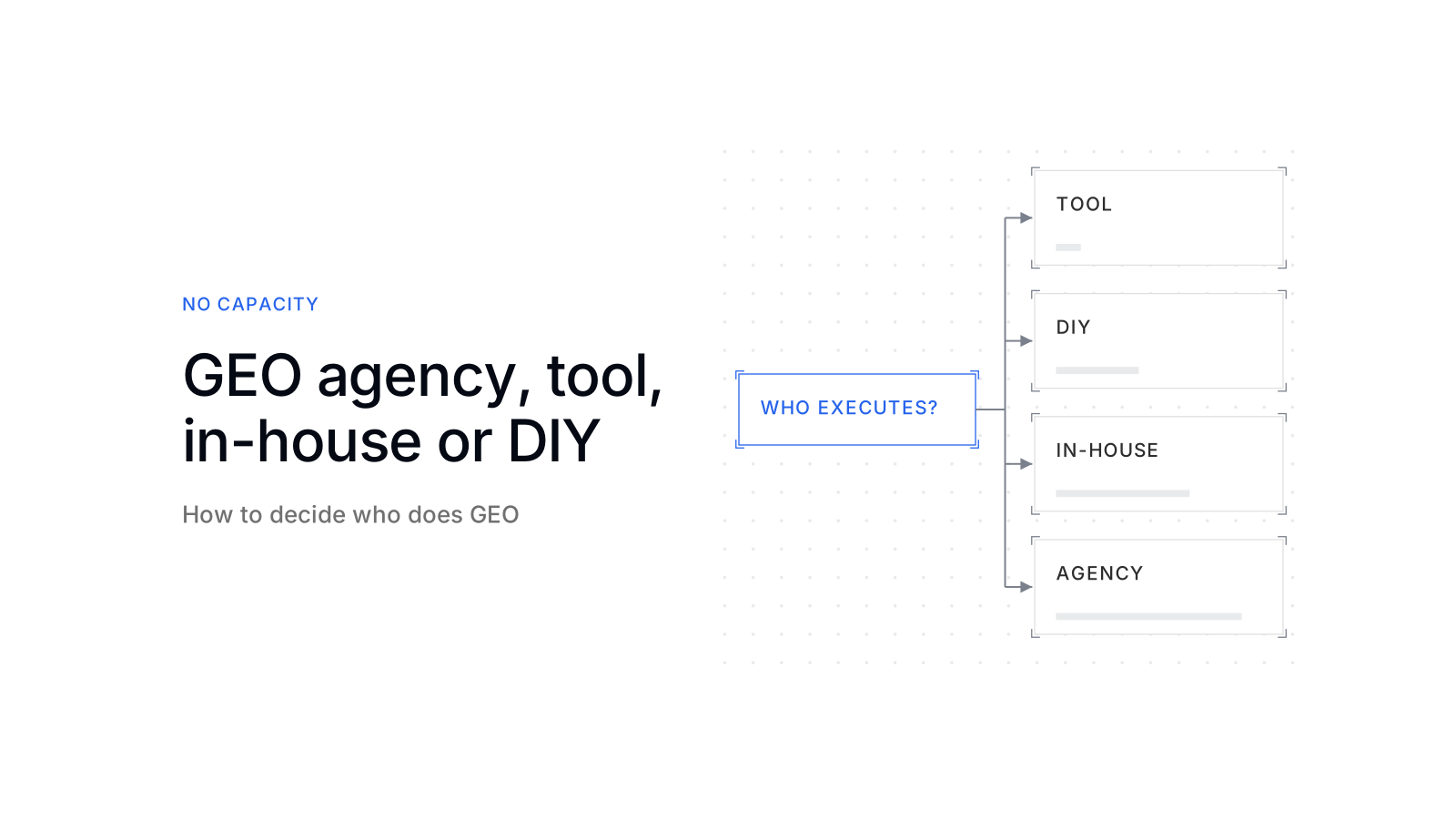
Managed GEO differs from a GEO tool and from a recommendation agency in one place: who changes your pages. A tool measures where AI answers name you and stops there. A recommendation agency adds a strategy and a list of changes, then hands them back to your team. A managed GEO provider makes the changes, publishes them and measures again.

Each fits a different team. A tool fits a team with writers and an SEO person who have free hours. A recommendation agency fits a team that wants outside judgement and can execute itself. Managed GEO fits a team where nobody has the hours. The full decision, with a decision tree, is in GEO agency vs tool vs in-house, and the do-it-yourself route in can you do GEO yourself.
Questions to ask a managed GEO provider
Ask these six questions before you sign. The answers show quickly whether an offer is managed or a report with a monthly fee:
If the answer is “your team, with our guidance”, it is not managed.
Look for research from buyer demand and your own data, not a list of questions where you already look good.
Answers vary from run to run, so one check per question per month says little.
The cited pages are the work list. A provider should show them.
Facts and published pages should need your sign-off.
AI visibility next to organic search and traffic, over time, with the limits of attribution stated.
Be careful with any provider that guarantees a position in ChatGPT. The list of brands changes with almost every run, so nobody controls a fixed rank. A provider can work on how often you are named and show you the measurement. How providers bill this work, from retainers to performance deals, is explained in how GEO is priced.
What scaile delivers
scaile runs GEO and SEO as one job, as Managed GEO, and lets you choose how much of it your team keeps. For BILD Reisen, mentions in AI answers to travel booking questions tripled in eleven weeks, from 14 May to 31 July 2026 (BILD Reisen case study). scaile is also the official GEO research partner of the Technical University of Munich.
scaile finds your buyer questions and tracks them across up to 9 answer engines in its own platform, app.scaile.to. Tracking only, no strategy or content.
You getWhere AI answers name you, how they describe you and which sources they citeA dedicated strategist builds the plan from your AI visibility, search and analytics data. scaile researches, writes and refreshes the pages (for content teams).
You getPages that answer your buyers’ questions and a weekly strategy callYour teamReviews and approves every step in app.scaile.toscaile takes over GEO completely: strategy, website changes, content, publishing, refreshes and monitoring (for teams without one).
You getReports and what scaile plans to do nextYour teamProvides expertise and approvalsManaged GEO is GEO that someone else runs for you, every month, with your approval on what goes live. It fits when your team knows the product but has no hours to research, write, publish and measure for AI search. If that is your situation, talk to scaile about We run it.
FAQ
Is managed GEO the same as a GEO agency?
Not always. Many GEO agencies deliver audits and recommendations that your team implements. Managed GEO means the provider also does the implementation: it writes and changes the pages, publishes them and keeps them current.
Does managed GEO replace our SEO agency?
It can. GEO builds on SEO groundwork such as crawlability, indexing and pages that answer the question, so a managed GEO provider that also does SEO avoids two plans for the same pages. If you keep an SEO agency, agree who owns which pages.
How long before managed GEO shows results?
Crawler access can be fixed within days to weeks, first citations usually take weeks, and a stable share of AI answers takes months. The timeline per stage is in scaile’s article on how long GEO takes.