AI visibility tools that also create content: options compared
In short
A tracking report shows where AI answers skip you; someone still has to find the right topics that need to be written about, write the page optimized for AI, and publish it. scaile tracks your buyers' questions, writes the pages with a source for every fact and publishes them after your approval.

Dora is a founding engineer at scaile. She studied computer science, psychology and neuroscience at TUM, which is the perfect fit for GEO: she has a deep understanding of technology and of the human side, and knows how to write and produce content that leads humans to buy and AI to show you in its answers.
Key takeaways
Tools that "also create content" do one of three things. They draft text in the tracker, give your team a workflow, or do the whole job as a service.
Before you compare article quotas, ask who checks every fact against a source and who keeps the page current after it goes live.
A small team gets the most from a service that writes and publishes. A large content team gets the most from a workflow it runs itself.
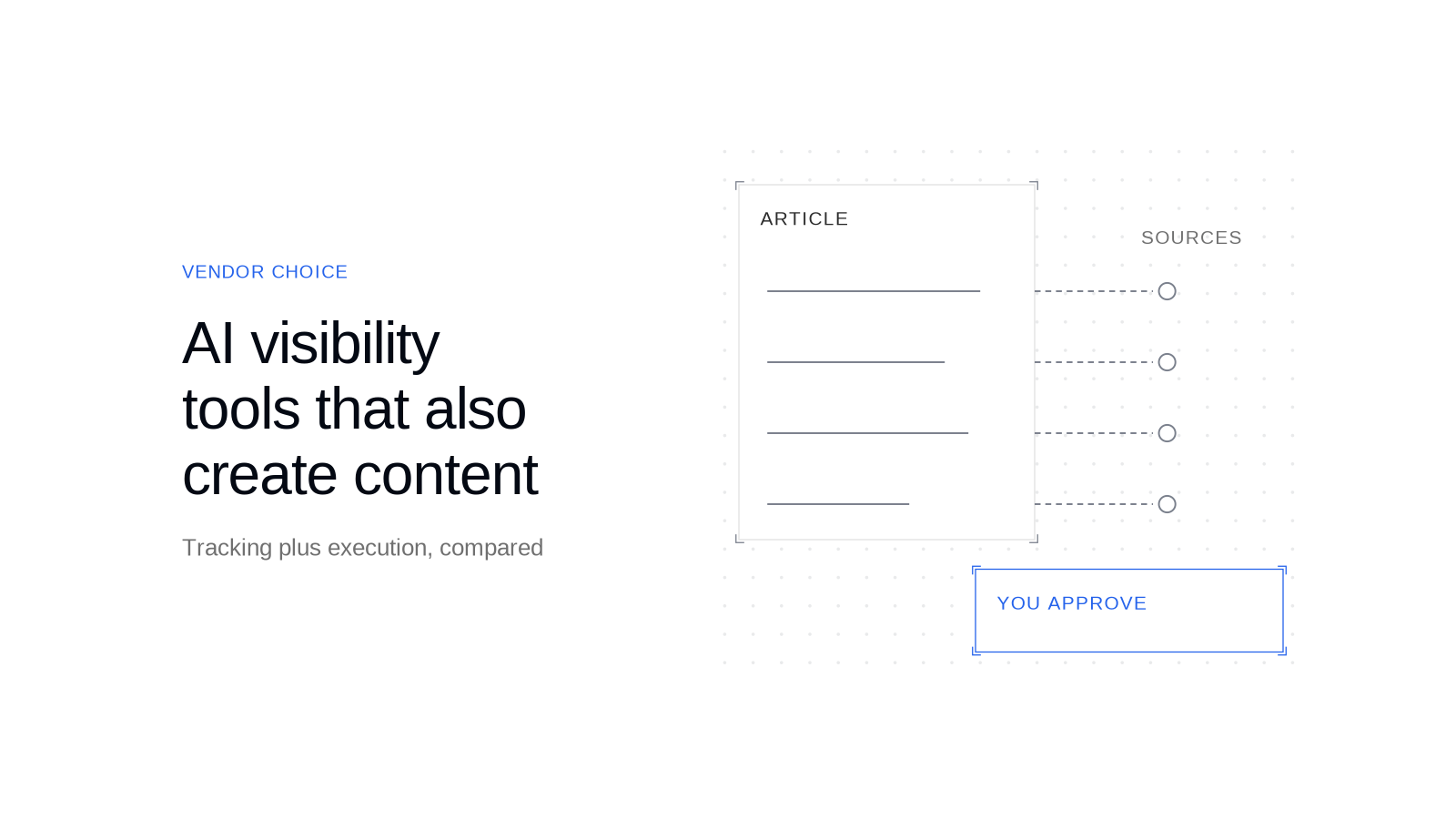
scaile is especially good at the quality step. Every fact in a draft sits next to its source, and every edit your team makes becomes a writing rule.
Which AI visibility platforms also create content?
Most teams that track AI visibility hit the same wall. The dashboard shows the buyer questions where ChatGPT or Gemini name a competitor. Then the report waits for someone with time to write.
That is why buyers look for a platform that both tracks and produces. Three kinds of option do this today, and each one gives you something different when it “creates content”.
The tracking tool writes articles or page copy with AI
You getDrafts your team checks, edits and publishesYour team builds repeatable workflows with AI agents and review steps
You getA production system your editors runA team tracks, plans, writes, publishes and refreshes with you
You getPublished pages and a weekly report on what movedProfound and Writesonic sit in the first group, AirOps in the second, scaile in the third. The broad comparison of trackers and their prices is in the best platforms to monitor and improve AI visibility; a plain list of alternatives is in Profound alternatives.
Three ways tracking turns into published content
The three options differ in who does the work between the report and the live page.
- Drafts from the tracker: a RadarKit review describes Profound’s AI Agents for content and AEO/SEO, which research prompts and generate and optimize content. [1] Writesonic’s Starter plan, at $79 a month billed annually, tracks 50 prompts on ChatGPT, Gemini and Google AI Overviews and includes 15 AI articles a month. [2] These tools are good for teams that want a fast first draft next to their tracking data.
- Workflows your team runs: AirOps offers playbooks and workflows with human review and approvals, plus Brand Kits and Knowledge Bases that its agents reuse in every run, according to RadarKit’s comparison. [3] It suits teams running large, governed content programs.
- A service that does the work: scaile does the tracking and the content work itself, from strategy and research to publishing, monitoring, reporting and optimization. This runs on our own tools: an analytics and planning tool, plus tools for crawling and intent mining. scaile is great for teams that want the pages written and live, not another tool to staff.
The more of the work the option takes on, the fewer hours your team spends between the report and the published page. How a service and a tracking tool compare in depth is set out in GEO service vs tracking tool.
How to check the content quality of each option
Content quality decides whether AI answers will cite a page and whether your legal or product team will let it go live. Ask every option for one sample article on a real buyer question, then run five checks:
- Facts against sources: can you see where each number, price and product claim comes from?
- Brand voice and product facts: does the draft use your positioning and your current product data, or generic copy?
- Human approval: is there a step where a person on your side signs off before publishing?
- Publishing: does the page go into your CMS with links, structured data and FAQs, or does someone paste it in?
- Refresh: who changes the page when prices, products or AI answers change?

A worked example shows how this plays out. A hypothetical HR software company with one content marketer asks each option for a sample article on “best HR software for a 200-person company”:
The draft arrives quickly. The content marketer checks every claim against the vendor pages by hand and publishes it in the CMS.
The company builds the workflow, the brand kit and the review step first. Once set up, it produces at volume with the marketer as reviewer.
scaile writes the article from the company’s Brand Kit and Knowledge Base. The marketer reviews it in the editor with each source beside its fact and approves it; scaile publishes it.
For a team with one content marketer, the check that matters most is who verifies the facts, because that is where the hours go.
Which option fits your team’s capacity
The right option follows the people you have, not the feature list.
A managed service fits best: scaile can take responsibility for SEO, AI search and content execution from strategy to reporting.
A managed service with your approval in the loop fits, or AI drafts if someone has time to fact-check each one.
A workflow platform fits a team that wants to own production; a service fits a team that wants extra output without new hires.
Beurer, a health and wellbeing brand, worked with scaile on exactly this balance. Kerstin Glanzer, Director Marketing at Beurer, puts it this way:
“To be found today, good SEO alone is no longer enough […]. scaile helped us identify customer questions, understand AI systems and build high-quality blog content with human checks in the right places.”
Kerstin Glanzer, Director Marketing, Beurer GmbH
What scaile delivers
scaile delivers tracking and finished content in one programme. scaile turns your knowledge into one Brand Kit and Knowledge Base, writes each article from it, and records every change your team makes as a writing rule for the next one.
Your strategist goes through the weekly report with you, and questions where you are missing go back into the content plan as new pages or refreshes.

scaile finds your buyers’ questions and tracks them across up to 9 answer engines
You getMentions, positions, sentiment and cited sources per questionA strategist ranks the gaps with you; scaile writes the pages and your team approves each one
You getEach gap matched to the page that closes itscaile takes over strategy, content, publishing, refreshes and reporting
You getPublished pages every month without adding headcountBILD Reisen tripled its mentions in AI answers and won 45% of the travel section’s Google Search clicks.
AI visibility tools that also create content either draft, give you a workflow, or do the work. scaile does the work: it tracks your buyers’ questions, writes pages with a source for every fact and keeps them current.
If you want the pages written and live, book a call with scaile about We run it.
FAQ
Can AI-generated content get cited by ChatGPT?
Yes, if the page answers the buyer’s question clearly, is accurate and can be crawled. Who wrote the first draft matters less than whether every fact holds up.
How much time does fact-checking AI drafts take?
It depends on the topic and the number of claims per article. Ask each vendor for a sample on one of your own buyer questions and time the check yourself.