AI share of voice tools compared (2026): how each one counts
In short
AI share of voice tools report different numbers for one brand, because each counts differently. Compare what they count and cover. scaile finds your buyer questions, tracks your share against competitors and writes the pages that close gaps.

Dora is a founding engineer at scaile. She studied computer science, psychology and neuroscience at TUM, which is the perfect fit for GEO: she has a deep understanding of technology and of the human side, and knows how to write and produce content that leads humans to buy and AI to show you in its answers.
Key takeaways
Two tools can show two different shares for the same brand: some count every mention, others count the answers that name you.
A fair test runs both tools on the same questions, AI assistants, country and competitor list for the same weeks.
Pick the tool by who acts on the number. A self-serve tracker suits a team that does the work itself; an enterprise platform suits brands in many markets.
The country limit on a plan matters as much as its price when you sell in more than one market.
scaile is especially strong after the number: it shows which competitors AI names instead of you per buyer question, then writes the pages to win them back.
Your CEO asks how often ChatGPT recommends you compared with your three main competitors. Two tools give you two different answers, and both are calculated correctly. Before you buy one, you need to know what each number counts.
Which AI share of voice tools fit which team?
The AI share of voice tools worth a shortlist in 2026 are Peec AI, the Semrush AI Visibility Toolkit, Ahrefs Brand Radar, Profound, Evertune and scaile. Which one fits depends on who on your team turns the number into action:
Peec AI fits SEO and content teams that want daily share of voice on 50 prompts and three AI models from 95 dollars a month. [1]
The Semrush AI Visibility Toolkit and Ahrefs Brand Radar fit teams that already work in Semrush or Ahrefs.
Profound and Evertune fit large brands that track many engines, regions and personas on custom plans.
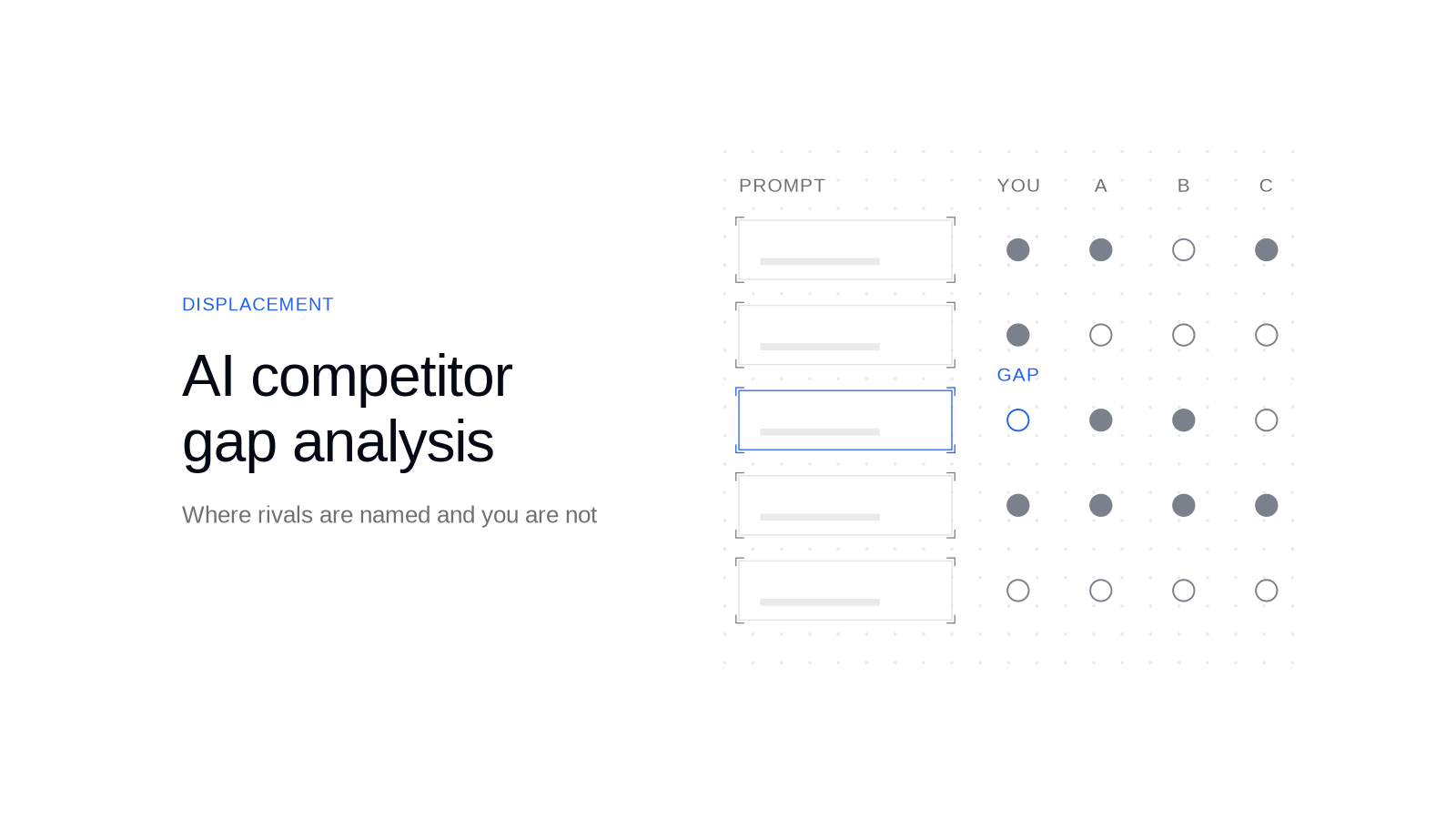
scaile fits teams that want the share of voice number and the work that moves it.
If you came from PR media monitoring: share of voice is a PR metric too, and 33% of PR professionals check it daily in a Cision poll. [2] AI share of voice counts AI answers instead of press coverage, so it needs one of the tools above.
How each tool counts share of voice
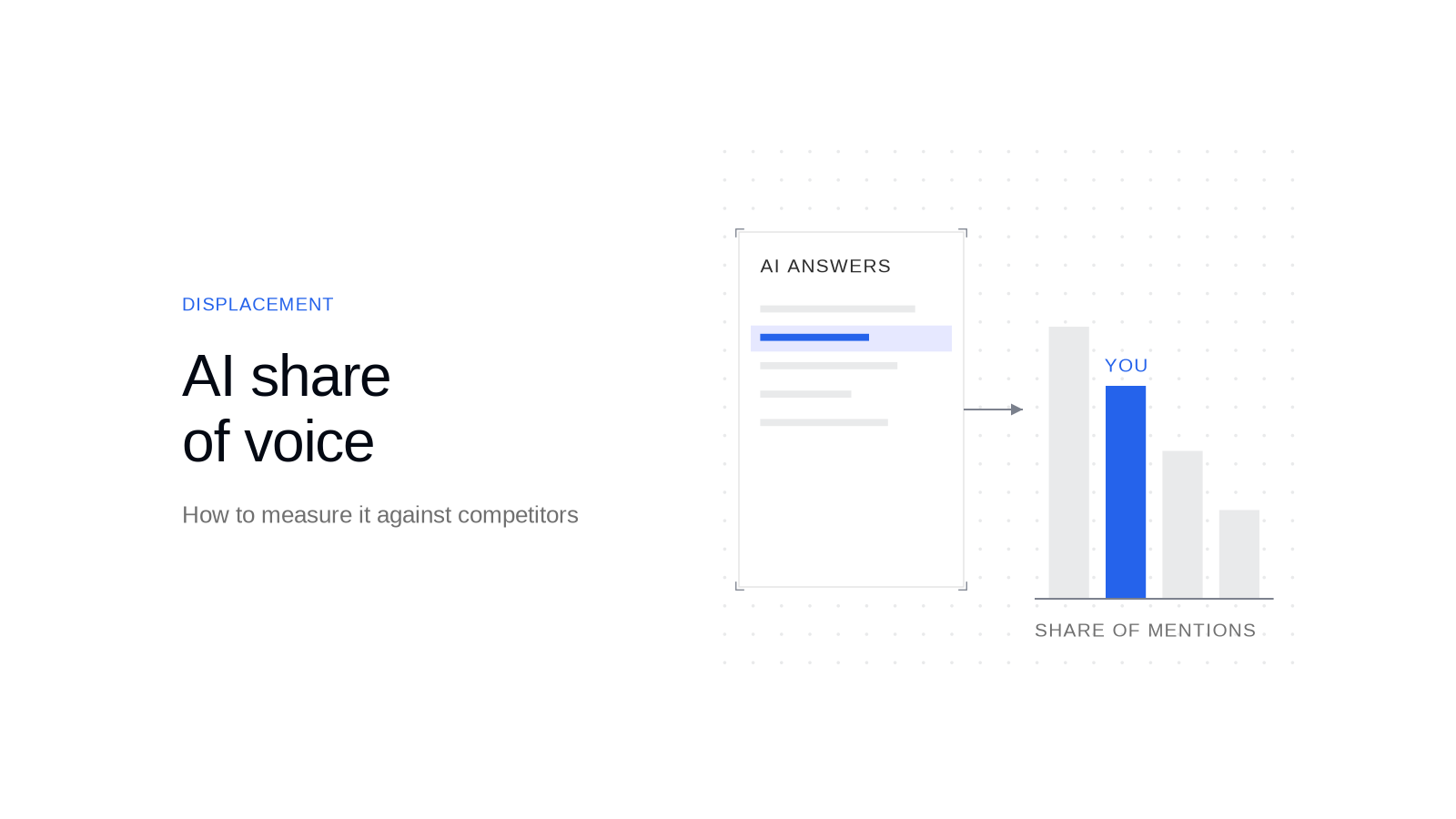
Each tool divides by something different, so the same AI answers can give each tool a different share. Here is what each one counts:
Your brand mentions as a percentage of all brand mentions in the answers, your own included. [3]
The percentage of mentions your brand receives in AI answers compared with competitors in your market. [4]
The percentage of AI responses in your topic set that mention or cite your brand, against competitors. [5] It counts answers and citations, not mention totals.
Share of voice next to a visibility score. Every tracked prompt runs daily and is captured from the browser, not the API. [6]
Takes 100 samples per prompt to reach statistical significance from the first day. [7]
Your share against the competitors you chose, in a daily, weekly and monthly view, shown step by step here.
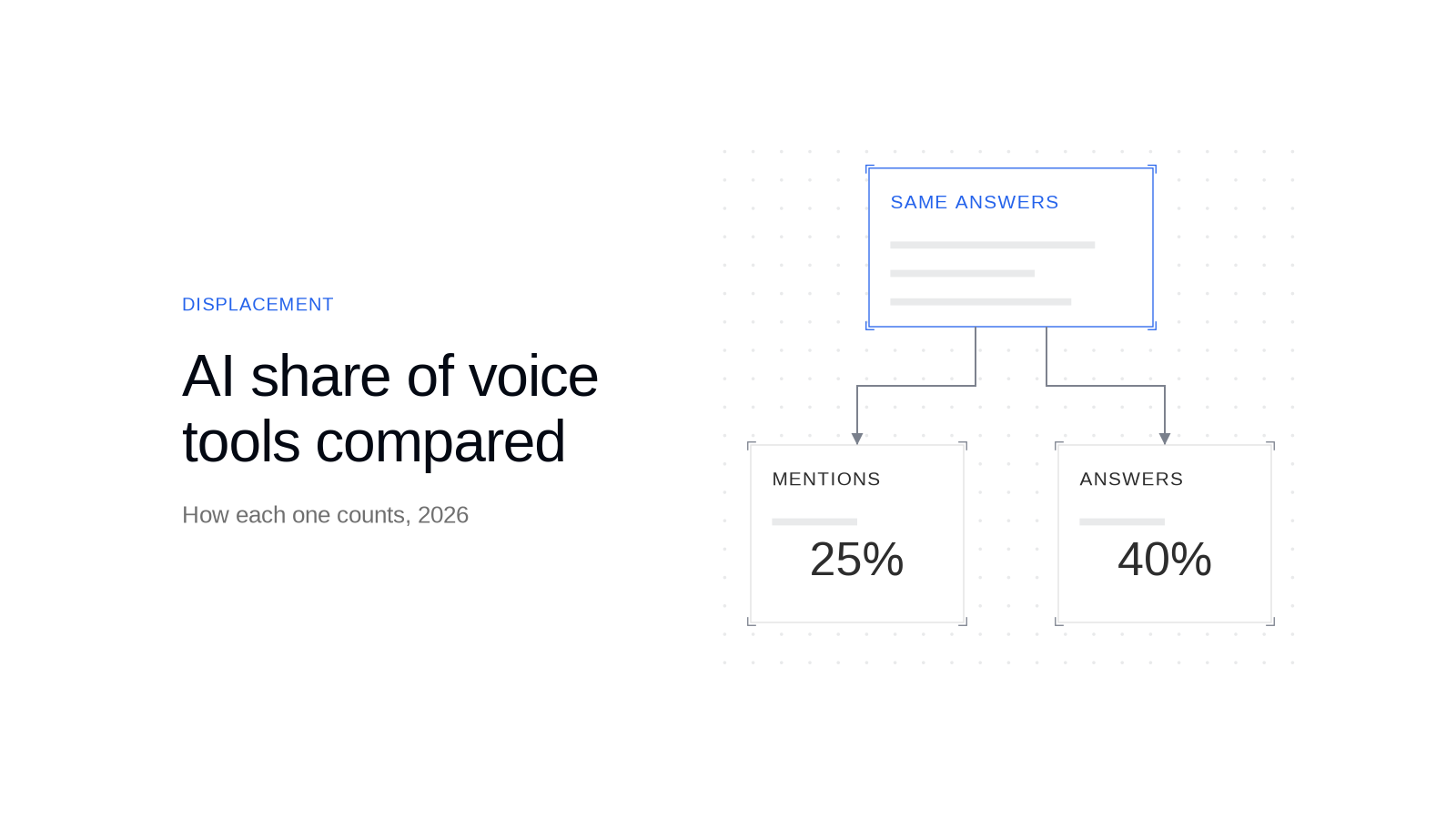
Take a hypothetical HR software company, not measured data. Ten AI answers name it four times and its three competitors twelve times. A mention count gives it 25%. Counting the answers that name it gives 40%, because it appears in four of ten.

Neither number is wrong. They answer different questions, which is why one tool’s share cannot be compared with another tool’s report. The four common formulas behind them are explained in how to measure AI share of voice.
Engines, countries and competitor benchmarking compared
The tools differ most in how many AI assistants and countries one plan covers. The table shows list prices in November 2026, as each vendor’s page shows them.
| Tool | AI assistants | Countries | Competitor benchmarking | Entry price per month |
|---|---|---|---|---|
| scaile | Up to 9: ChatGPT, Perplexity, Google AI Mode, Gemini, Copilot, AI Overviews, Brave, Claude, Exa | Regions, languages, products and personas per market | Your own and competitor domains, plus which competitors answers name instead | Scoped in the proposal |
| Peec AI | 3 of your choice; up to 26 on Enterprise | 1 on Starter; several countries from Advanced, 495 dollars [1] | Competitor suggestions on every plan | 95 dollars |
| Semrush AI Visibility Toolkit | Platforms such as ChatGPT and Google AI Mode | Brand reports for one location and language, more for 99 dollars each; prompt tracking in 220+ countries [8] | Competitor Research report | 99 dollars, 25 tracked prompts |
| Ahrefs Brand Radar | AI Overviews, AI Mode, ChatGPT, Copilot, Gemini, Perplexity; Claude on prompts | Prompts are entered in the same location as the keyword they were sourced from [9] | Any brand in an index of 588 million prompts, no setup | €179 for the index; own prompts from €46.7 [5] |
| Profound | Up to 10, including ChatGPT, Perplexity, Claude, Gemini and Google AI Mode | Custom regions and languages | Competitor rankings | Enterprise, custom [10] |
Evertune lists competitor benchmarking on every plan, five models on Starter for 60 dollars and eleven on Pro for 800 dollars a month, billed annually. [7] Prompt counts per plan are compared in Peec AI alternatives.
If you sell in several markets, check the country line before the price. Peec’s Starter plan covers one country, and Semrush charges 99 dollars for each further location.
How to compare two tools’ numbers fairly
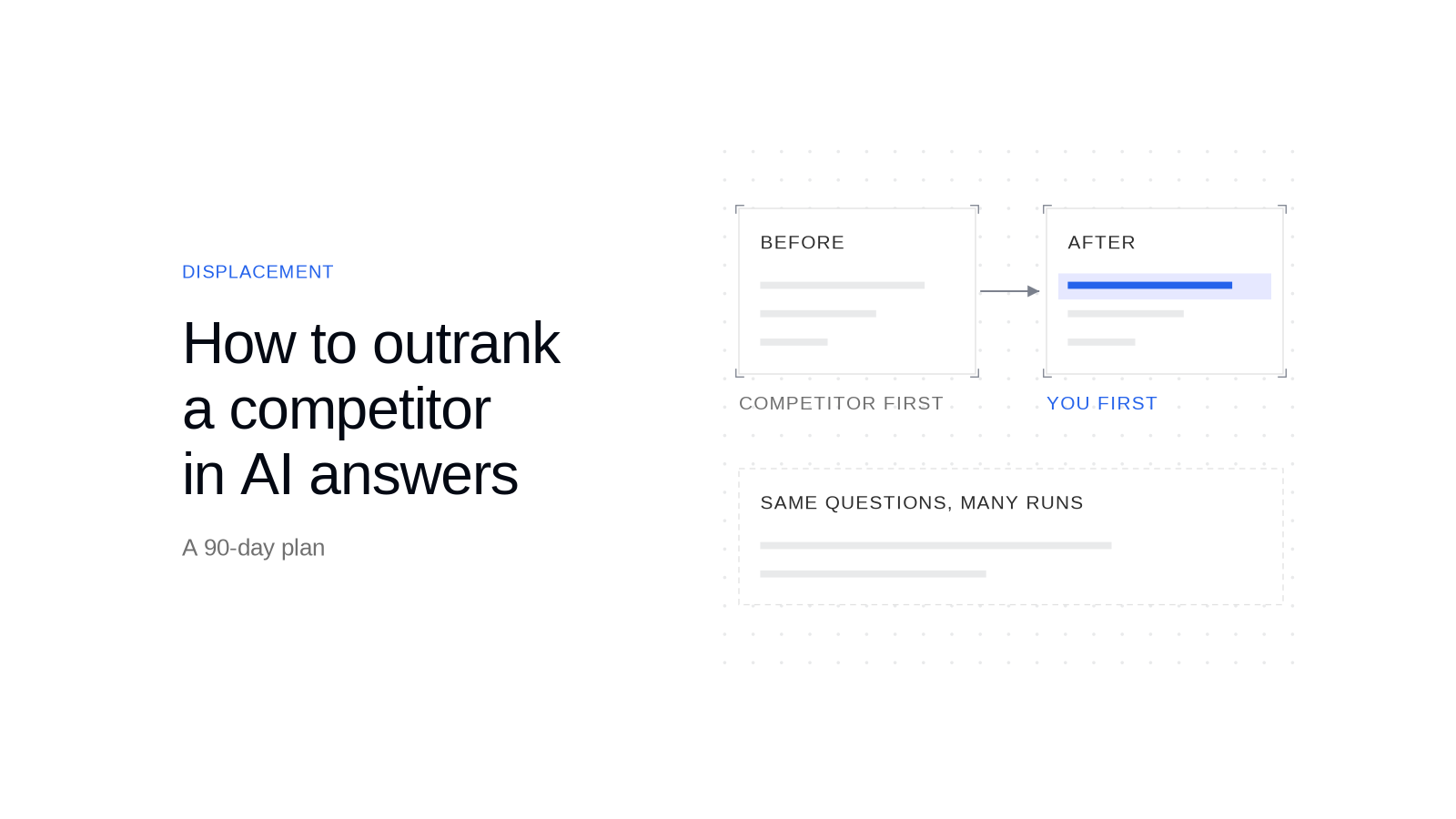
Run both tools on the same settings for the same weeks, or you compare two setups instead of two tools. Five settings decide the number:
- The same questions: use the buyer questions you want to win, not the vendor’s default set. Which prompts to track shows how to build them.
- The same AI assistants: a share across three models cannot be compared with one across nine.
- The same country and language: Semrush ties brand reports to the location set at setup, and Ahrefs enters each prompt in the location of its source keyword.
- Enough runs: answers change every time. How often you appear across many answers is the number worth tracking, not your place in one. [11]
- The same competitor list: a list you pick upfront sets the pool your share is measured in.
The fifth point moves the number most. Back to the hypothetical HR software company: add a fourth competitor that its answers name eight times, and its share drops from 25% to 17% without a single answer changing.

A full test plan for a tool trial is in how to choose an AI visibility platform.
When a managed service is the better choice
A managed service is the better choice when your team has the share of voice number but not the hours to turn each lost question into a page. A tool shows the gap; someone still has to find the cited sources, write the content and publish it.
The share, the competitors ahead of you and the sources AI cites
The same data, plus a strategist and the published pages that win the lost questions
BILD Reisen, an Axel Springer company, worked with scaile on AI visibility, content production and reporting:
Mentions in AI answers to travel booking questions tripled inside one stable prompt panel, as the BILD Reisen case study documents.
Of the Google Search clicks on BILD Reisen’s travel section landed on pages scaile produced.
“scaile saw the problem, understood us, and made us more efficient and more effective without changing the way we work,” says Serge Heitmann, CEO of Axel Springer Teaser Ad GmbH.
What a service does beyond a tracker is broken down in GEO service vs tracking tool.
What scaile delivers
scaile delivers your share of voice against the competitors that matter, measured on the buyer questions it finds with you, and the work that raises it. You choose how much of that work scaile takes on:
scaile’s tracker-only way to work
You getYour share of voice per buyer question, AI assistant and market, with the competitors and sources named instead of youA scaile strategist plans with your team in weekly calls
You getA ranked list of lost questions, and the pages scaile writes for them, approved by your teamscaile takes over the whole job
You getStrategy, content, publishing, refreshes and a report on how your share moves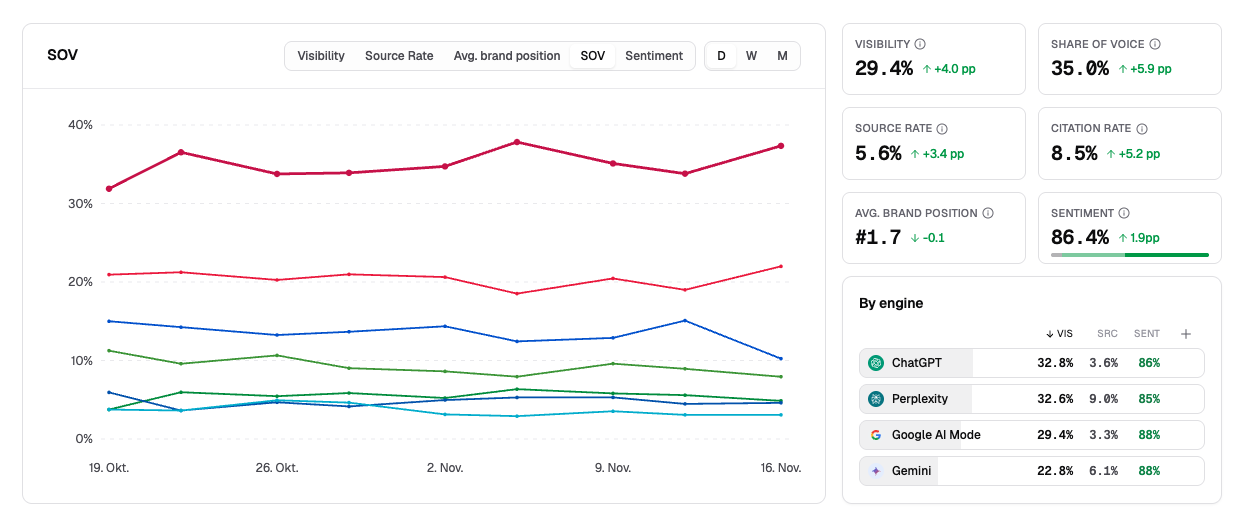
Every AI share of voice tool counts in its own way, so compare them on the same questions, assistants, country and competitor list before you trust a number. If your team needs the work after the number as well, talk to scaile about Strategy with you.
FAQ
Do AI share of voice tools see the same answers as my buyers?
Not always. Profound captures answers from the browser rather than the API. Ahrefs asks its prompts in the web version of each AI platform without stored user data or prior context. Answers your buyers see also depend on their history and location, so every tool measures a sample.
How often should AI share of voice be measured?
Daily collection with a weekly or monthly read works for most teams. Single answers change from run to run, so a trend over several weeks tells you more than one day. Semrush updates its brand performance reports weekly; Profound and Peec run tracked prompts daily.
Sources
- Pricing for Peec AI - AI Search Platform for Marketing teams and SEO agencies
- What is Share of Voice? How to Measure & Increase Brand SoV
- Share of Voice - Peec.ai Docs
- AI Visibility Metrics
- Ahrefs Brand Radar: Study your brand’s AI visibility
- Understand how AI is talking about your brand | Profound
- Pricing — Plans Built for AI Visibility | Evertune
- AI Visibility Toolkit: Boost Brand Visibility in AI Search
- What is Brand Radar, and how to use it? | Help Center - Ahrefs
- Pricing | Profound
- Chapter 2: AI Share of Voice | Waikay®