ChatGPT business profiles: what claiming one does and does not do
In short
Since 10 November 2026 you can claim your business in ChatGPT, as a profile in Business Hub. The profile does not get you into the answers: ChatGPT names the businesses on the pages and records it reads before it answers. So your own website counts first: describe exactly what you offer, for whom and how you differ. Find the questions real users ask before they buy, and answer each of them clearly on your pages. scaile works on those pages as Managed GEO: research, tracking and the changes.

Dora is a founding engineer at scaile. She studied computer science, psychology and neuroscience at TUM, which is the perfect fit for GEO: she has a deep understanding of technology and of the human side, and knows how to write and produce content that leads humans to buy and AI to show you in its answers.
Key takeaways
Since 10 November 2026 you can claim your business in ChatGPT and see mentions and clicks.
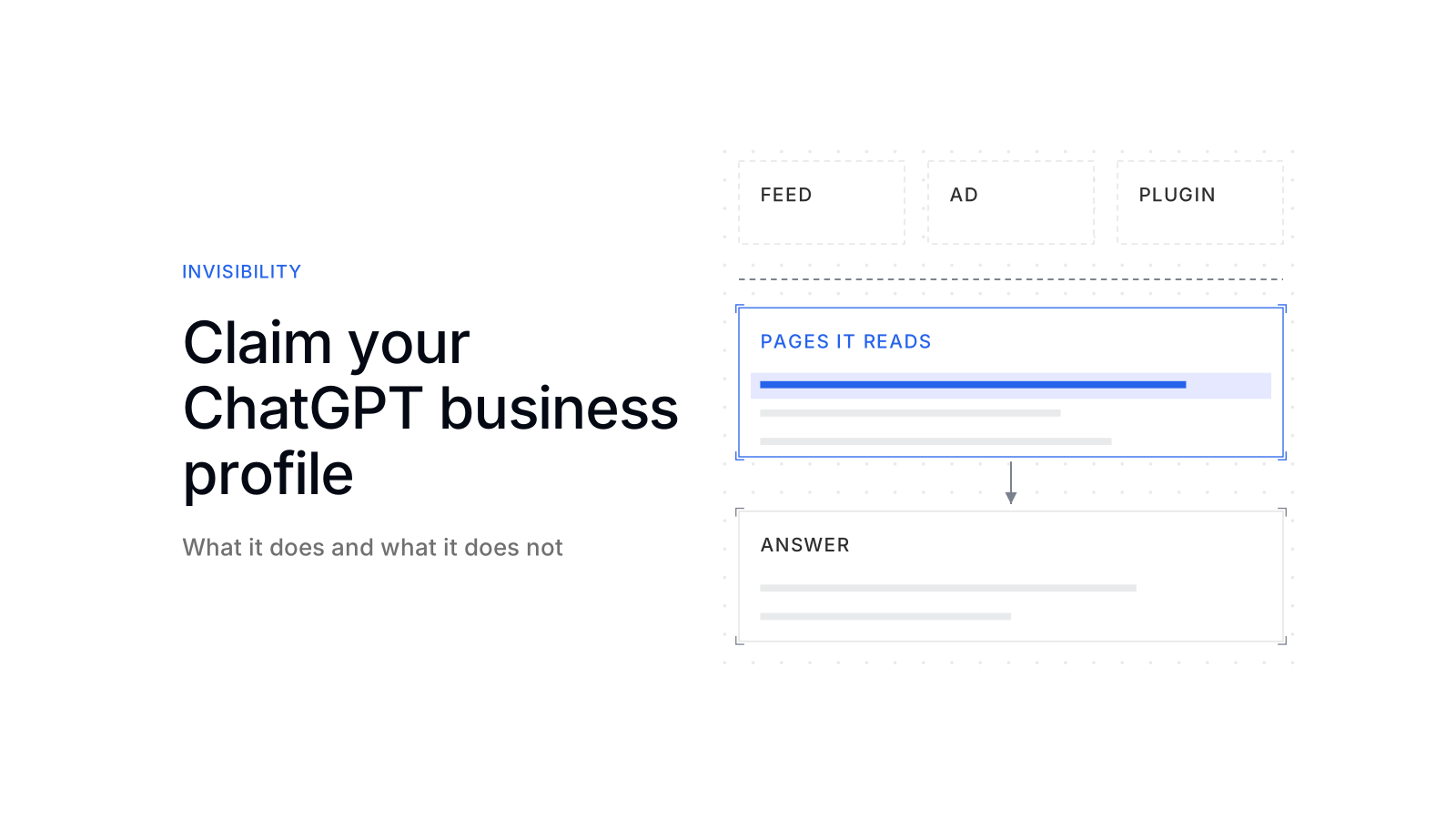
The profile does not get you into the answer, and neither do product feeds, ads or plugins.
ChatGPT names the businesses on the pages it reads. Describe your offering clearly and answer the questions real users ask.
Local maps in ChatGPT matched Google Maps in scaile's tests. Keep your Google profile up to date.
Can you list your business in ChatGPT?
Yes, since 10 November 2026, as a beta. In Business Hub, companies claim their listing in ChatGPT, manage their details and see how people engage with them. [1] Not to be confused with ChatGPT Business, the subscription for teams.
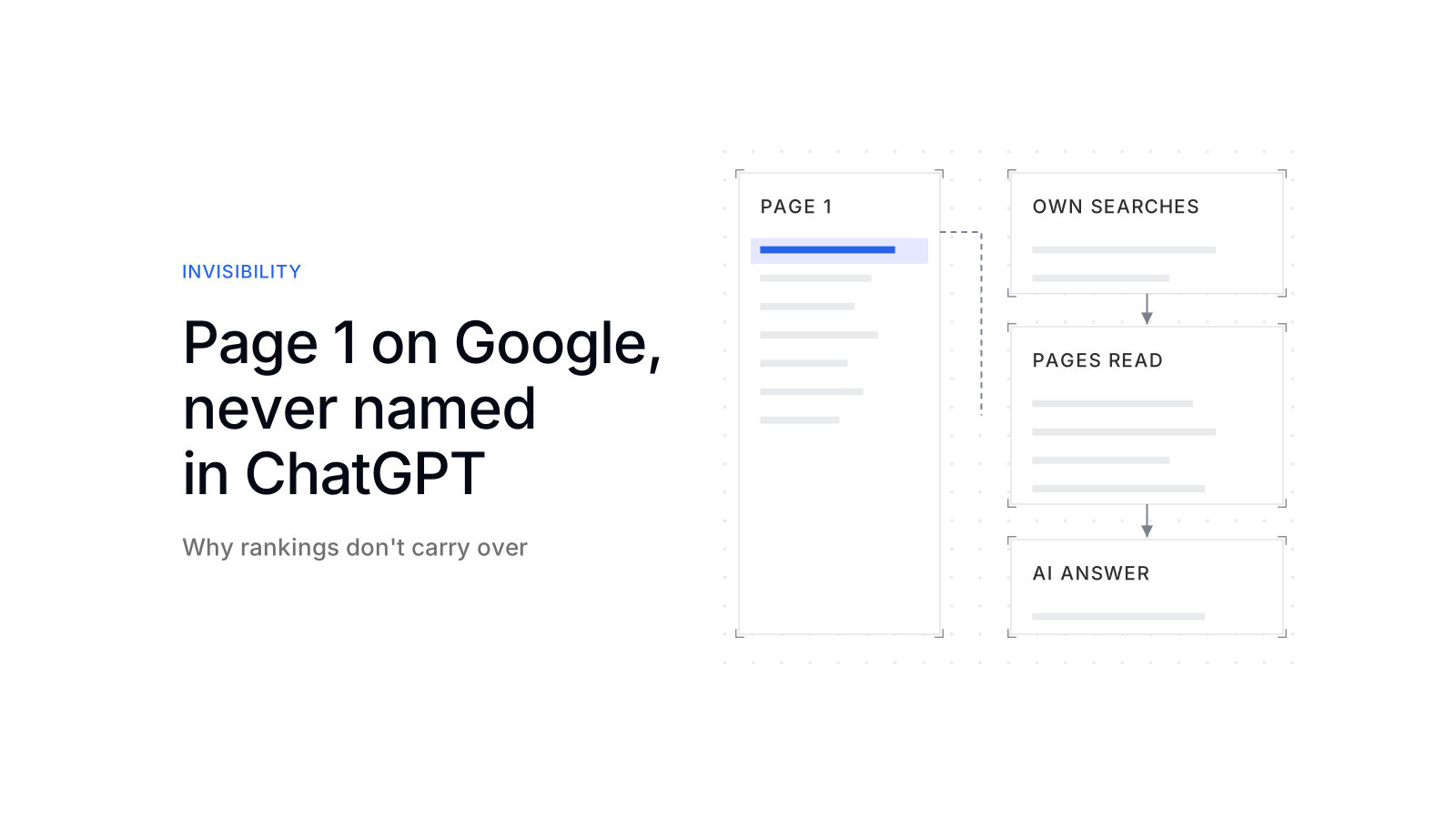
What the profile does not do is write you into the answer. OpenAI says ChatGPT keeps making independent recommendations and that a claimed profile carries no guarantee of better placement or more sales. [2] When a question needs current information, ChatGPT searches the web, reads a few pages and writes its answer from them. On average, at least 92.7% of the brands ChatGPT recommends are brands included in the content it cites. [3] So the way into the answer is still to be on the pages it reads, and named there.
That is also why “get my business indexed on ChatGPT” means something narrower than it sounds. ChatGPT search shows websites that OpenAI’s search crawler, OAI-SearchBot, is allowed to visit. Sites that opt out are not shown in ChatGPT search answers, though they can still appear as navigational links. [4] Being in the index is the entry ticket. It does not make ChatGPT recommend you.
What a ChatGPT business profile does, and what it does not
You search for your business in Business Hub, pick the matching listing or enter it, and prove it is yours. OpenAI can verify that through a business phone number, a business email address, your website domain or a Shopify account. After that, the person managing the profile has to pass an identity check through Persona before they can publish changes or see any data. A blue check then appears on the profile. At launch it is free. [2]
You change what people see about your business in ChatGPT. Retailers can upload a product feed with prices and stock, or connect a Shopify store. [2]
Business Hub shows mentions, website clicks and recurring topics in the answers that named you, over the past 28 days. For online businesses, a mention only counts when ChatGPT references the website. Numbers only appear above a minimum threshold. [2]
An assistant in your name that answers questions about your products and policies. For now only for online retailers and online service companies in the U.S. [1]
The profile cannot do that. OpenAI guarantees no better placement, and ChatGPT keeps recommending independently. [2] Whether you are named still depends on the pages ChatGPT reads.
If your business can already claim its profile, it is worth doing, mostly for the data: for the first time you see, from OpenAI itself, how often ChatGPT points to your website. Local stores and restaurants can only claim existing U.S. listings for now. [2] And no conversations: OpenAI does not share users’ chats with businesses. [1]
What else you can submit to OpenAI, and what each one changes
Besides the profile, OpenAI accepts three kinds of submission from companies. Each one feeds a different part of ChatGPT, and none of them decides whether the written answer names you:
Merchants can apply to share product data so their products can appear in ChatGPT’s shopping results. [5] Onboarding is open to approved partners who apply through a form. [6] Shops on Shopify or Etsy are already integrated and need no application. Shopping is live for ChatGPT users in the U.S.; a self-serve merchant platform is announced. [5]
Ads run in a labelled slot next to the answer. OpenAI’s crawler OAI-AdsBot only visits pages submitted as ads, to check them against OpenAI’s policies. [4]
The plugin directory helps people discover and use a plugin in ChatGPT and Codex; a plugin can include MCP connections, skills or both. [7] It is a way to let people use your software inside ChatGPT, not a way to be recommended.
Claim, verify, manage your details, see mentions and clicks. The written answer still comes from the pages and records ChatGPT reads, so that is where the work is.

The product feed is for products only. Shoppers buy on the merchant’s own site or app, with no fees for purchases made there. [5] OpenAI recommends uploading a full catalog snapshot at least once a day, and age-restricted goods such as alcohol, nicotine and gambling, as well as prescription-only medications, are excluded. [6] A service company, a law firm or a software vendor has nothing to put in it.
Where the businesses in a ChatGPT answer come from
They come from three places, and you can work on all three:
- Your own pages. If OAI-SearchBot can read them and they answer the question, ChatGPT can cite them. After a robots.txt change, OpenAI’s search systems can take about 24 hours to adjust. [4] How ChatGPT turns a question into its own searches is in how OpenAI ChatGPT search works.
- Other pages that name you. Comparisons, lists, reviews and trade articles that come back for your buyers’ questions. The more of the pages ChatGPT reads mention you, the more often you are named, as how to rank in ChatGPT shows with scaile’s counts.
- Business records for local searches. When someone asks for a pharmacy or a plumber in a city, ChatGPT usually shows a map with a record for each business: rating, reviews, address, opening hours.
Those local records are not filled in by the business. Only stores and restaurants in the U.S. can claim an existing local listing for now. In scaile’s study of local searches in ChatGPT, 50 conversations produced 146 map-record appearances. 142 carried the provider label serp, one tripadvisor-feed, and three had no label. All four pharmacy records matched with Google had the same rating and review count as Google Maps. That points to Google-compatible business data, though the study could not name the supplier.

Can you pay ChatGPT to recommend your business?
No. You can pay for an ad, and the ad stays outside the answer. OpenAI’s rule, as reported by Storyboard18: “Ads do not influence the answers ChatGPT gives you. Answers are optimised based on what’s most helpful to you. Ads are always separate and clearly labeled.” [8] Testing began in the United States, for users on the free and low-cost tiers. [8]
The ad system works like a search ad system with a few twists. Advertisers can build ads from a product catalog, [9] hotel feeds are available only to approved pilot advertisers, [10] and the context hints that steer an ad are not exact-match keywords. [11] Budgeting an ad campaign is a fair decision. It just answers a different question than “how do we get recommended”. The difference between the crawlers is drawn in how to get your business mentioned in ChatGPT.
What to do instead, by type of business
What counts first depends on what you sell:
Products appear in shopping results through the feed, and in the written answer through pages that review and compare them.
Do firstCheck that product pages state price, stock, delivery and returns clearly, and apply for the product feed if you sell in the U.S.Free checkThe Agentic Commerce Readiness Check sends a real shopping agent through your shopChatGPT answers local questions with a map and a record per business, built from data you do not enter yourself.
Do firstKeep your Google profile complete and current, and your name, address and phone the same on every directory in your industry. Claim your local listing in ChatGPT once that works outside the U.S.ThenA page per service and location that answers what customers askNo feed and no map: you get in only through pages.
Do firstWrite down what you offer, for whom and how you differ, so every page says it the same way (define your offering)ThenPages that answer your buyers’ questions, and a place on the comparisons and lists ChatGPT cites for themAlsoClaim your profile in Business Hub to see how often ChatGPT points to your websiteFor all three, one rule holds: a profile or a directory entry does not replace a page ChatGPT reads. A mention on a page it cites for your buyers’ question does. If ChatGPT already names a competitor where you should be, why ChatGPT does not mention your company goes through the usual causes.
How to check whether ChatGPT knows you
Check three things, in this order. First, whether OpenAI’s search can reach you: robots.txt, your CDN and your firewall must let OAI-SearchBot through. Which AI crawlers can read your site explains what to look for. The free GPT Search Check shows how your website shows up in OpenAI’s search index for up to three search queries.
Second, whether ChatGPT names you for the questions your buyers ask. Ask them in fresh sessions, more than once, because the list of names changes from run to run. Note who is named and which pages are cited. Those cited pages are your work list.
Last, whether anything moves. Once you have claimed your profile, Business Hub shows how often ChatGPT pointed to your website over the past 28 days and how often people clicked. It does not show which questions those were or who was named instead. For that you still need your own checks.
What scaile delivers
scaile does the work this article describes, question by question: it finds what your customers ask, sees which pages ChatGPT and the other assistants read for it, and builds the pages that answer it. SEO and GEO run as one job, and the questions you still lose go back into the plan.
scaile finds your buyer questions and tracks them in its own platform, app.scaile.to. Tracking only, no strategy or content.
You getFor every question, whether ChatGPT names you, at which position, and the sources it citesA dedicated GEO strategist builds the plan from your AI-visibility, search and analytics data. scaile writes and refreshes the pages, and your team reviews and approves every step.
You getPages that answer your buyers’ questions, a plan for the third-party pages that matter and a weekly strategy callYour teamReviews and approvesscaile takes over completely: strategy, website changes, content, publishing, refreshes and monitoring.
You getReports and what scaile plans nextYour teamProvides expertise and approvalsClaiming your business in ChatGPT works since November 2026, and it is worth it for the data. OpenAI also takes product feeds, ads and plugins. None of it writes you into the answer. What does is being on the pages ChatGPT reads: your own, readable for its crawler, and the third-party pages that come back for your buyers’ questions. If you want a strategist to plan that with your team and scaile to do the work, talk to scaile about Strategy with you.
FAQ
Does a claimed ChatGPT profile get me into the answers?
No. It lets you manage what is shown about your business and see mentions and clicks. Whether ChatGPT names you for a question still depends on the pages it reads for it. OpenAI guarantees no better placement.
Can a business outside the U.S. claim its ChatGPT profile yet?
Claiming is open to businesses where ChatGPT is available and OpenAI supports the verification. Local listings for stores and restaurants are U.S. only for now, and Business Agents only for online retailers and online service companies there.
Does letting GPTBot train on my site get me into ChatGPT’s answers?
Not into its search answers. OpenAI treats its crawlers separately: GPTBot collects content that may be used to train its models, OAI-SearchBot decides what can appear in ChatGPT search, and each robots.txt setting is independent of the other. For answers that cite the web, OAI-SearchBot is the one that has to be allowed.
Can a German shop use ChatGPT shopping today?
It can apply, but the shopping results are shown to ChatGPT users in the U.S. for now. OpenAI says it plans to expand to more merchants and regions over time, so a shop selling only in Germany gains little from the feed yet and more from product pages that comparison articles cite.
Sources
- OpenAI Developer Community: Introducing Businesses in ChatGPT in beta
- VentureBeat: OpenAI lets you claim your business in ChatGPT
- How much can you influence which brands ChatGPT recommends?
- Overview of OpenAI Crawlers
- OpenAI: Power product discovery in ChatGPT
- Agentic Commerce: Get started
- ChatGPT plugins: Upload and submit your plugin
- OpenAI details ad rules as ChatGPT moves toward ad supported model
- Ads in ChatGPT: Product feeds
- Ads in ChatGPT: Hotel property feeds (limited beta)
- Ads in ChatGPT: Targeting