How to rank in ChatGPT: what moves the needle
In short
ChatGPT searches its own index, which decouples it from Google: a good Google position does not carry you into ChatGPT. To rank there, you need to understand how ChatGPT sorts pages by correctness and importance, and which algorithm sits behind that. That is exactly what scaile specialises in: our team of IT specialists understands these algorithms and produces content that makes you visible in ChatGPT. To do this, scaile reads the fan-out queries, the searches ChatGPT runs in the background, and creates content that ranks much higher.

Dora is a founding engineer at scaile. She studied computer science, psychology and neuroscience at TUM, which is the perfect fit for GEO: she has a deep understanding of technology and of the human side, and knows how to write and produce content that leads humans to buy and AI to show you in its answers.
Key takeaways
ChatGPT has no fixed ranking. For most buying questions it searches the web, reads a few pages and names the brands those pages name.
Matching the right buyer questions always matters most: the biggest lever is a page that answers the exact question a buyer asks. Understanding how ChatGPT's algorithm sorts pages gets you further still. How strong your website is counts for much less.
Your brand is named more often when several of the pages ChatGPT reads mention it and one of them is near the top of its results.
If your site blocks OpenAI's search crawler, ChatGPT search cannot show your pages at all.
Judge progress by how often you are named when the same questions are asked many times, not by one screenshot.
How do you rank in ChatGPT?
You rank in ChatGPT by becoming part of what it reads before it answers. For most buying questions, ChatGPT searches the web first. It writes its own searches, called fan-out queries: 184 of them for 80 answers in scaile’s sample of ChatGPT answers, with a median length of 12 words. It reads a few of the pages that come back and names the brands on them. At least 92.7% of the brands ChatGPT recommends appear in the content it cites. [1]
So three things move you, in this order. Your pages come back for the searches ChatGPT writes. They answer the question better than the other results. And the other pages it reads name you. A Google position does not carry over, because ChatGPT searches its own index. In the same sample, 3.5% of the pages ChatGPT cited (18 of 517) ranked on Google’s page 1 for the searches ChatGPT itself ran.

Is there a #1 spot in ChatGPT?
No, not as a stable position. Ask ChatGPT the same question twice and the list of brands changes. In a SparkToro test, 600 volunteers ran 12 prompts through three AI tools a combined 2,961 times. [2] There was less than a 1 in 100 chance that ChatGPT or Google’s AI gave the same list of brands in any two responses. [2]
“Rank #1 in ChatGPT” therefore means being named, and named early, in a large share of the answers to one question. SparkToro calls that share across many runs probably a reasonable measure of how visible a brand is. [2] A screenshot with your brand on top proves one run. The goal is to be named in most of them.
First check that ChatGPT can find you
ChatGPT search can only show pages its search crawler is allowed to visit. OpenAI uses OAI-SearchBot to surface websites in ChatGPT’s search features. Sites opted out of it are not shown in ChatGPT search answers, though they can still appear as navigational links. [3]
Check robots.txt and your CDN or firewall rules for OAI-SearchBot before you change any content. GPTBot is a different crawler, for training data; which AI crawlers can read your site sorts out which is which. The free GPT Search Check shows which of your pages OpenAI’s search index returns for up to three searches.
What moves the needle first: content, structure or authority?
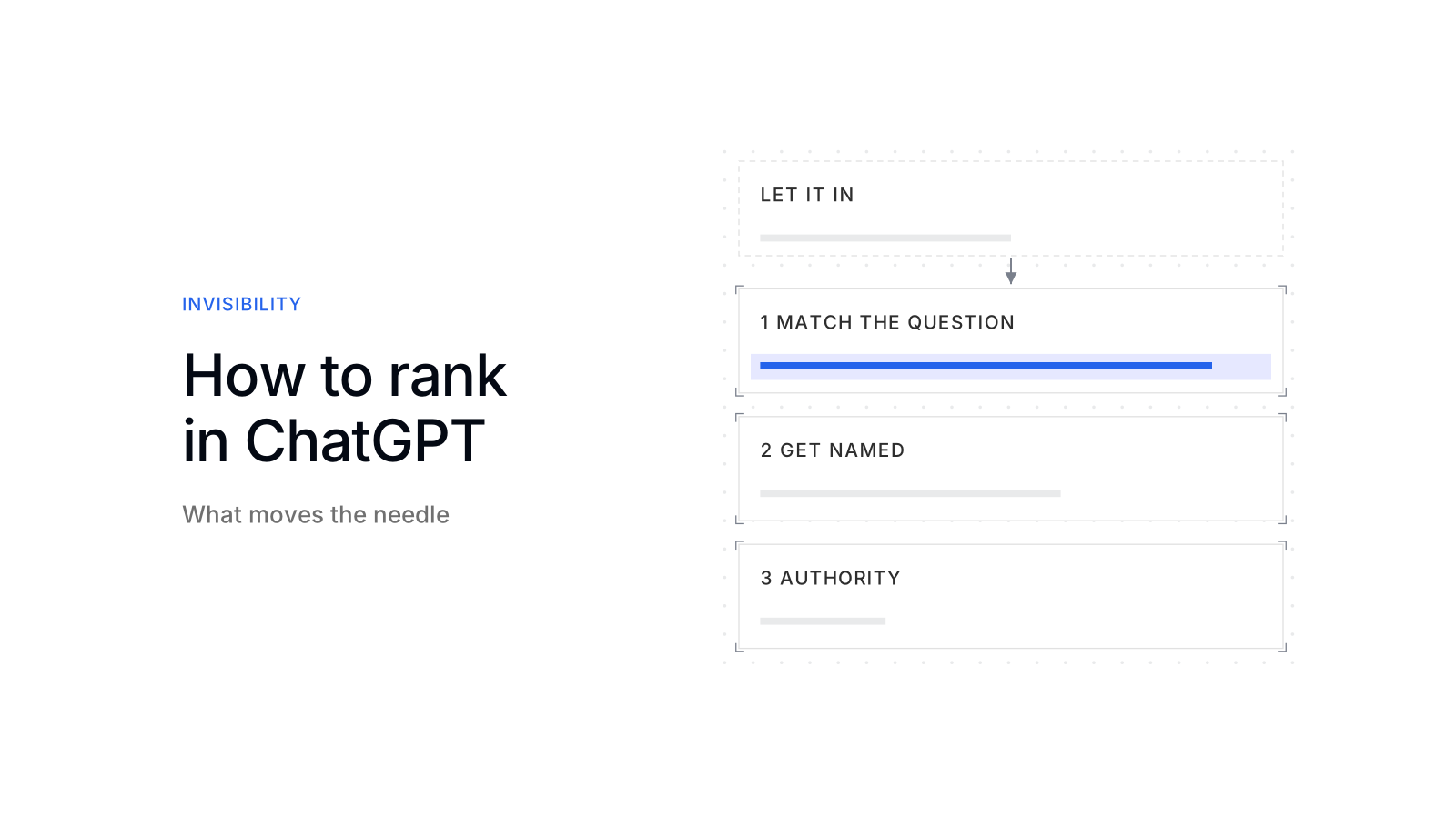
Content that matches the question comes first, structure second and authority last. ChatGPT does not show how it sorts search results by correctness and importance, but DeepSeek’s search API does, and scaile used it to measure what moves a result up. Across real buyer questions, knowing which question was asked explains about two thirds of the differences in score. Knowing the website’s authority explains less than a fifth. The full DeepSeek study also tested the same questions in ChatGPT: it found pages for matching searches and almost never for unrelated ones.

For an SEO team, that reorders the work:
Write the page for the long question a buyer asks, with its conditions: company size, use case, market, budget. ChatGPT’s fan-out queries are long, so a page built around one short head term often does not come back.
A guide, a product page and a comparison that each answer the question give your site more than one result. In scaile’s study, several pages of one website helped in ChatGPT too, but only in the top 10.
DeepSeek’s AI reads a few pieces cut from a page, mostly from the middle. An answer that only sits in a summary at the bottom is easy to miss.
A third-party authority score does not decide where you land. Links still matter for being found at all, as the backlinks article shows.
Evidence on the page helps on top of the match. In the study that named generative engine optimization (GEO), its methods raised visibility in generative engine responses by up to 40%. [4] Which kinds of evidence those were, and what does not work, is in how to get cited in AI answers.
Get named on the pages ChatGPT reads
A brand is named most often when several of the results ChatGPT reads mention it and at least one of them ranks near the top. scaile counted this in 15,700 ChatGPT cases, by how many of the results mentioned a brand and where the best of them ranked:
| Results that mention the brand | Best one in places 1–5 | Best one in places 11–30 |
|---|---|---|
| 1 | 37% named | 23% named |
| 2–3 | 55% | 33% |
| 4 or more | 81% | 44% |
The authority of the websites that mentioned the brand made no difference. What counted was how many of them there were and whether one ranked high. So the third-party pages worth working on are the ones that already come back for your buyer questions: comparisons, lists, reviews and trade articles. Ask the questions, note the cited pages, and get named on them with facts their publishers can check. Which channels each AI assistant reads is covered in how to get your business mentioned in ChatGPT.
How fast can you rank on ChatGPT?
A new page can be cited within weeks. A larger share of answers takes months. On scaile accounts, one new guide was cited within weeks, and AI mentions or the share of answers rose over two to five months. Why each layer has its own clock is in how long GEO takes to show results.
AI engines used beurer.com in 17% of their answers to 14 buying questions in May 2026. In September they used it in 42%, more than any other website, on the same questions. Read the Beurer case study.
Which tools help, and how do you know it worked?
Three kinds of tools help, each with its own job:
Does OpenAI’s search return your pages for a given search? The GPT Search Check above shows that.
Who does ChatGPT name for your buyer questions today? Ask them by hand in fresh sessions, or use the free AI Visibility Check.
How often are you named across many runs of a fixed set of questions, and which sources are cited? Only this shows whether the work moved anything.
You know it worked when your share of answers rises on the same questions, run many times, and the cited pages include yours. Which questions belong in that set is in how to decide which prompts to track. What to ask of a tracker is in how to choose an AI visibility platform.
What scaile delivers
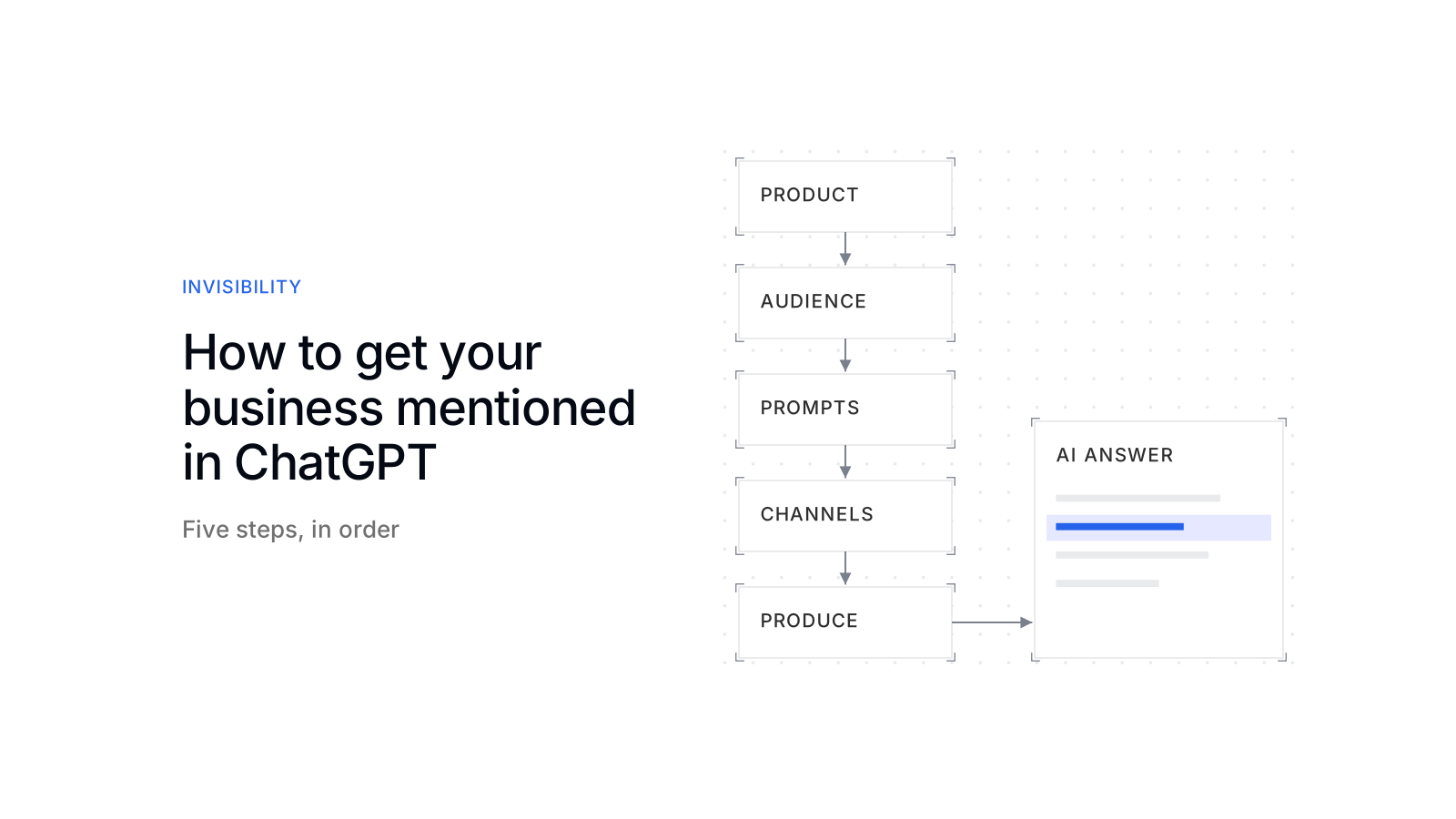
scaile works the levers in the order that moves them: buyer questions found from data, pages that match them, mentions on the pages ChatGPT reads, and measurement over many runs. SEO and GEO run as one job, and the questions you still lose go back into the plan.
The difference is understanding the algorithm. Because scaile knows the fan-out queries behind your buyer questions, it builds pages for the exact searches ChatGPT runs, not for terms it never searches.
scaile finds your buyer questions with you and tracks them in its own platform, app.scaile.to. Tracking only, no strategy or content.
You getFor every question, who ChatGPT names, at which position, and the sources it citesA dedicated GEO strategist builds the plan from your AI-visibility, search and analytics data. scaile writes and refreshes the pages, and your team reviews and approves every step.
You getPages that match your buyers’ questions, refreshes and a weekly strategy call on your share of answersYour teamReviews and approvesscaile takes over completely: strategy, website changes, content, publishing, refreshes and monitoring.
You getReports and what scaile plans nextYour teamProvides expertise and approvalsYou rank in ChatGPT question by question. Let its crawler in, match the fan-out queries it runs and answer on more than one page. Get named on the results it reads, and count how often you are named over many runs. No one can guarantee the result, but each lever can be measured. If you want a strategist to plan this with your team and scaile to do the work, talk to scaile about Strategy with you.
FAQ
Do I need separate pages for ChatGPT and Google?
No. One page per buyer question serves both. What changes is that the page answers the long version of the question, with its conditions, so it also comes back for the searches ChatGPT writes. Two URLs for one question compete with each other.
Why does ChatGPT name us for one wording of a question and not another?
Each wording leads ChatGPT to different fan-out queries, and different searches return different pages. Track the variants your buyers actually use, not one phrasing, and make sure your page answers the conditions they add.