SEO vs GEO budget: how to split your search budget in 2026
In short
Most of your search budget goes into work that pays off in Google and in AI answers at once. Roughly 10 to 30 percent goes into work only AI search needs, and if the search budget has no room for it, part can come from the media budget. scaile shows rankings, AI answers and AI visits in one report, so you can back every shift with your own numbers.

Dora is a founding engineer at scaile. She studied computer science, psychology and neuroscience at TUM, which is the perfect fit for GEO: she has a deep understanding of technology and of the human side, and knows how to write and produce content that leads humans to buy and AI to show you in its answers.
Key takeaways
Most SEO work also pays off in AI answers. Plan one shared base for both instead of two separate budgets.
Put roughly 10 to 30 percent into work only AI search needs: checking AI answers, writing pages for buyer questions and earning mentions on the sites AI assistants quote.
If the search budget has no room for that, pay for mentions on other websites from the media or PR budget.
AI assistants send about 1 percent of website visits today but shape the choice before the click. Do not size GEO by visits alone.
Start with one product in one market and shift 5 to 10 points once a quarter, only when your own numbers move.
scaile is especially good at the quarterly review: one report shows rankings, AI answers and AI visits side by side, so leadership sees which part of the budget earned more.
You have one search budget, an SEO agency or team that spends it, and a leadership team asking what you do about ChatGPT. Moving money blindly risks the traffic you have; doing nothing leaves the AI answers to competitors.
How should you split your search budget between SEO and GEO?
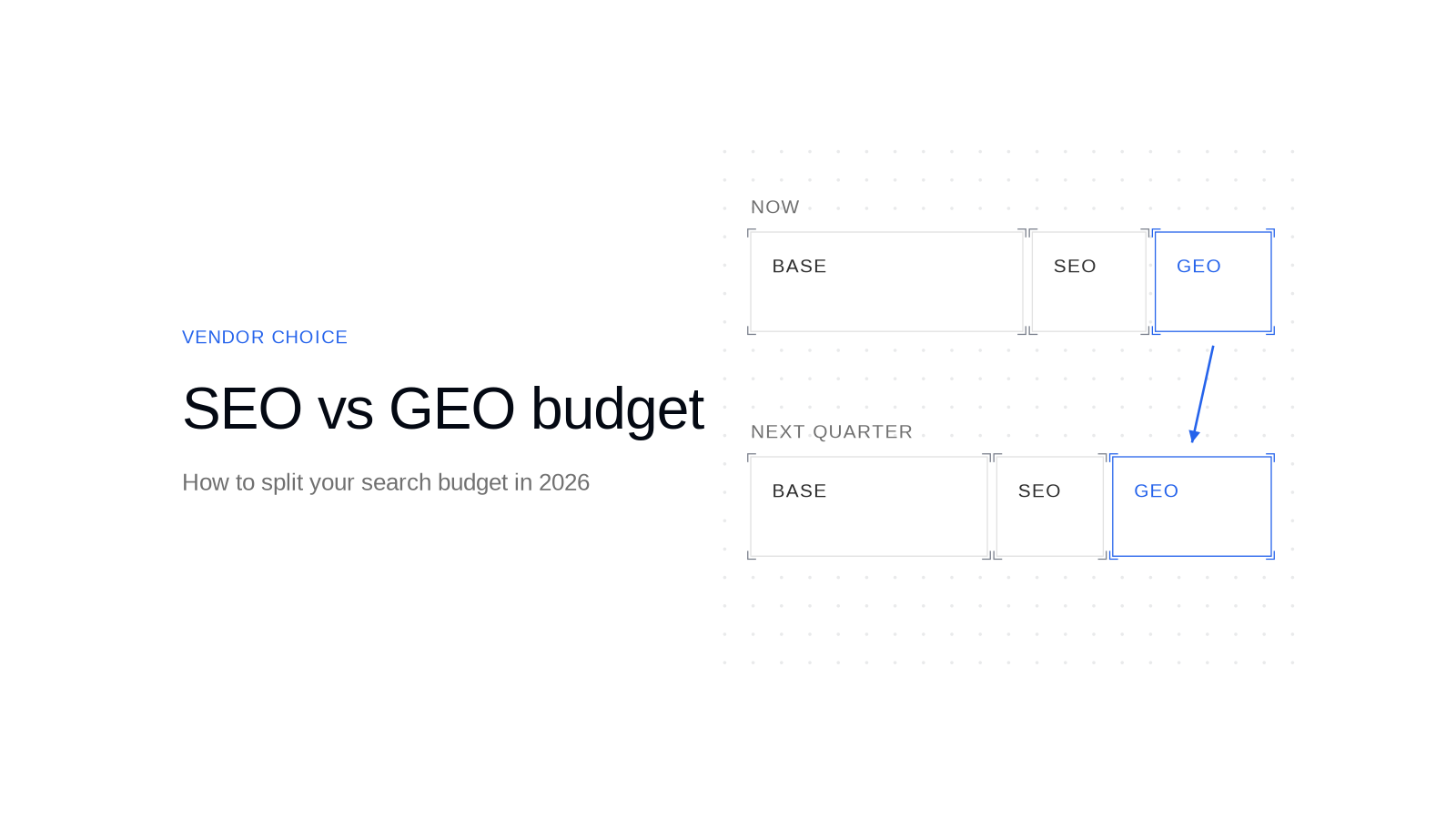
Split it into three lines, not two: a shared base that serves Google and AI answers alike, a small line for work only classic SEO needs, and a GEO line for work only AI search needs. As a starting rule, not a benchmark, the GEO line takes 10 to 30 percent of the search budget.
Generative engine optimization (GEO) means getting your brand named and your pages cited in answers from ChatGPT, Gemini, Perplexity and Google’s AI Overviews.
The base is shared because the same work counts twice. Google says the best practices for SEO remain relevant for AI Overviews and AI Mode, and that no special optimizations are necessary to appear in them. [1]
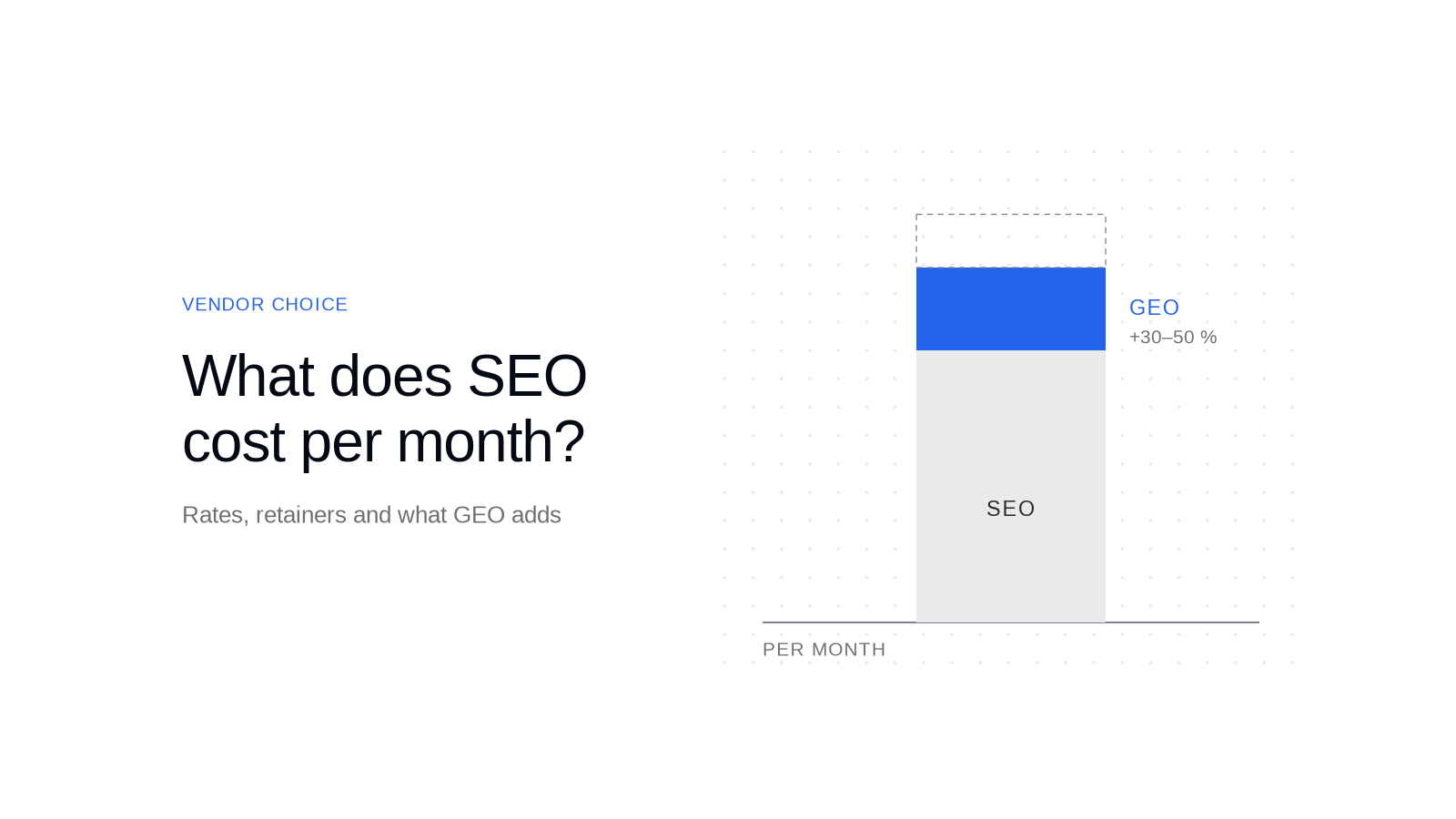
Size the GEO line by how your buyers use AI assistants, not by the visits those assistants send today. What GEO adds to an SEO retainer in euros is covered in what SEO costs per month and what GEO adds.
What each budget line buys
Each line buys different work and is judged by different numbers. The difference in the work itself is explained in GEO vs SEO.
Technical health, crawlable and indexed pages, and content that answers your buyers’ questions.
Judged byClicks, rankings and conversionsRank tracking, link building and the snippets, images and local results of the classic results page.
Judged byPositions and clicks per pageYour buyer questions asked in AI assistants over many runs, pages built for those questions, and the reviews, lists and portals AI assistants draw on.
Judged byHow often answers name you, cite your pages and send visitsDecide which line each task belongs to before the quarter starts. A shared task that only the SEO report shows looks like SEO spend, even when it also wins AI answers.
How big the GEO share should be: three starting points
The GEO share depends on how far your buyers already choose in AI assistants. Pick the row closest to your situation, then adjust it with your own baseline. The splits below are a planning example, not a benchmark:
| Situation | Shared base | SEO only | GEO only | Why start here |
|---|---|---|---|---|
| Small business, first real search budget | 70% | 20% | 10% | The base is not finished; GEO pays for a baseline and a few pages for buyer questions |
| Mid-sized company with an SEO agency | 60% | 15% | 25% | The agency keeps the base; the new line covers AI answers |
| Enterprise in software or IT | 55% | 15% | 30% | Buyers already compare vendors in AI assistants |
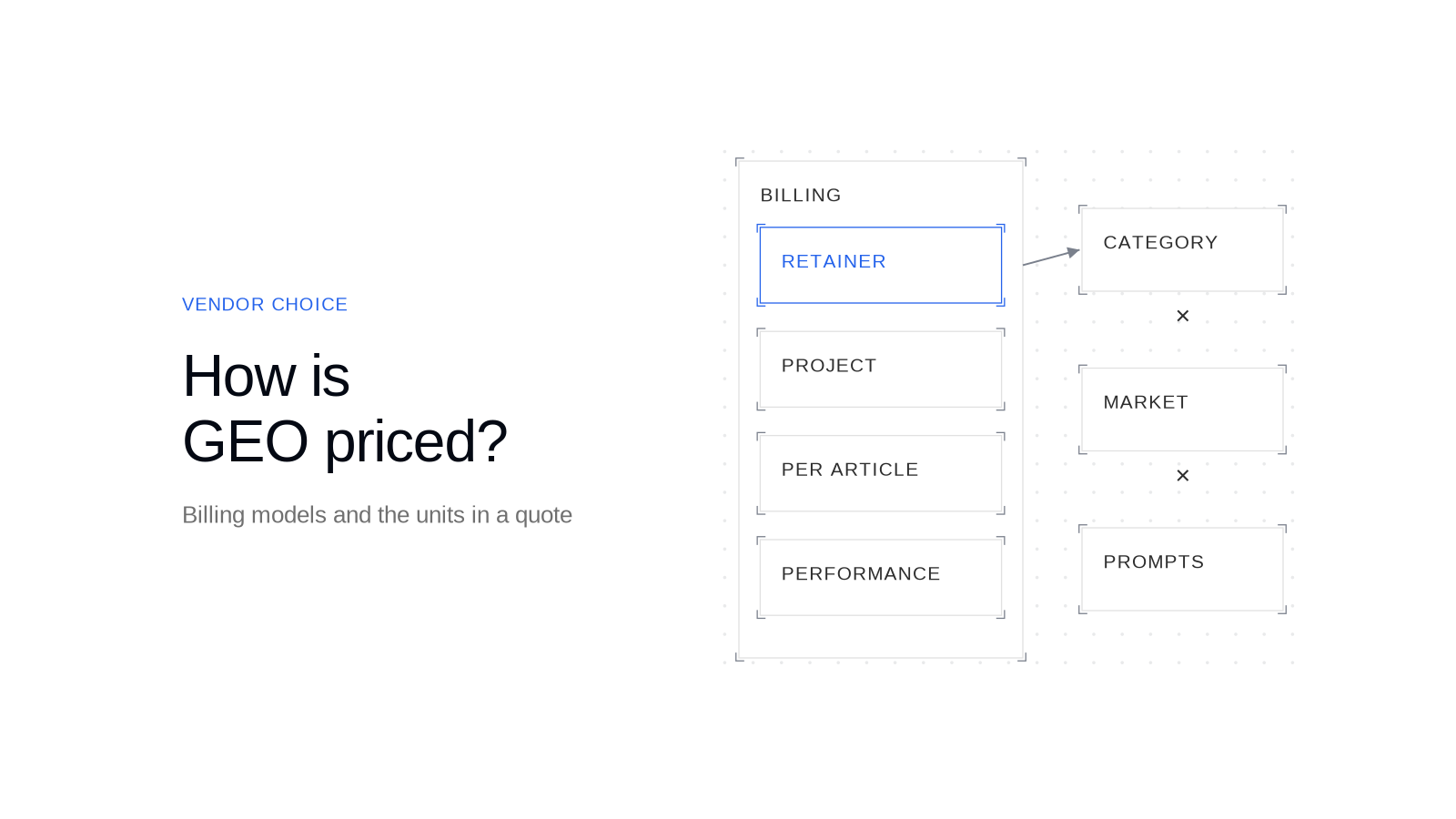
The money behind each row depends on your budget size; typical bands for agencies, tools and in-house teams are in what GEO costs.
Where the money for GEO comes from
GEO has two sources of money: the search budget and the media budget.
You split the search budget as in the table above.
Fits whenyour search budget is large enough to give up a GEO lineYou pay for part of the GEO work from the budget for media and PR.
Fits whenthe SEO budget is small and there is no GEO budget of its own yetThe media budget fits because AI assistants also cite press articles, comparison portals, best-of lists and forums, and showing up there is media and PR work.
On the second route, the work splits across the budgets like this:
Pages for your buyers’ questions. Paid from the search budget.
Mentions on those sites. Paid from the media or PR budget.
When your pages rank high for a search without an ad, you need fewer ads there. The money saved can go into GEO, as long as just as many good leads come in.
An example: your baseline shows that ChatGPT cites three comparison portals for your most important buyer question, but none of your pages. Then money for mentions on those portals does more than one more page on your website.
Why AI referral traffic undercounts AI search
AI assistants send few visits, so a split based on referral traffic alone gives GEO almost nothing. Conductor’s benchmarks of U.S. traffic from May to September 2025 show how low the share is: [2]
- All 10 industries: 1.08% of website traffic came from AI referrals.
- IT: 2.80%, the highest share.
- Consumer Staples: 1.91%.
- Communication Services and Utilities: 0.25% and 0.35%, the lowest.

Read AI referral share as the minimum AI search reaches, not its size. The answer often replaces the click. In Pew Research Center’s browsing data, users who saw an AI summary clicked a traditional search result in 8% of visits, against 15% without one. [3]
Ahrefs analyzed 300,000 keywords and found that an AI Overview went with a 34.5% lower average click-through rate for the top-ranking page. [4] A buyer who reads your competitor’s name in the answer may never visit anyone.
Starting small: the first GEO budget
A first GEO budget buys three things for one product in one market. It should be small enough to approve this quarter and big enough to measure.
- Baseline: your buyer questions asked in ChatGPT, Gemini, Perplexity and AI Overviews over several runs, with the competitors named instead of you. The free AI Visibility Check gives a first reading.
- Pages for the lost questions: the few questions where a competitor is named and you are not, answered on your own site.
- A review date: after one quarter, the same questions asked again and compared.
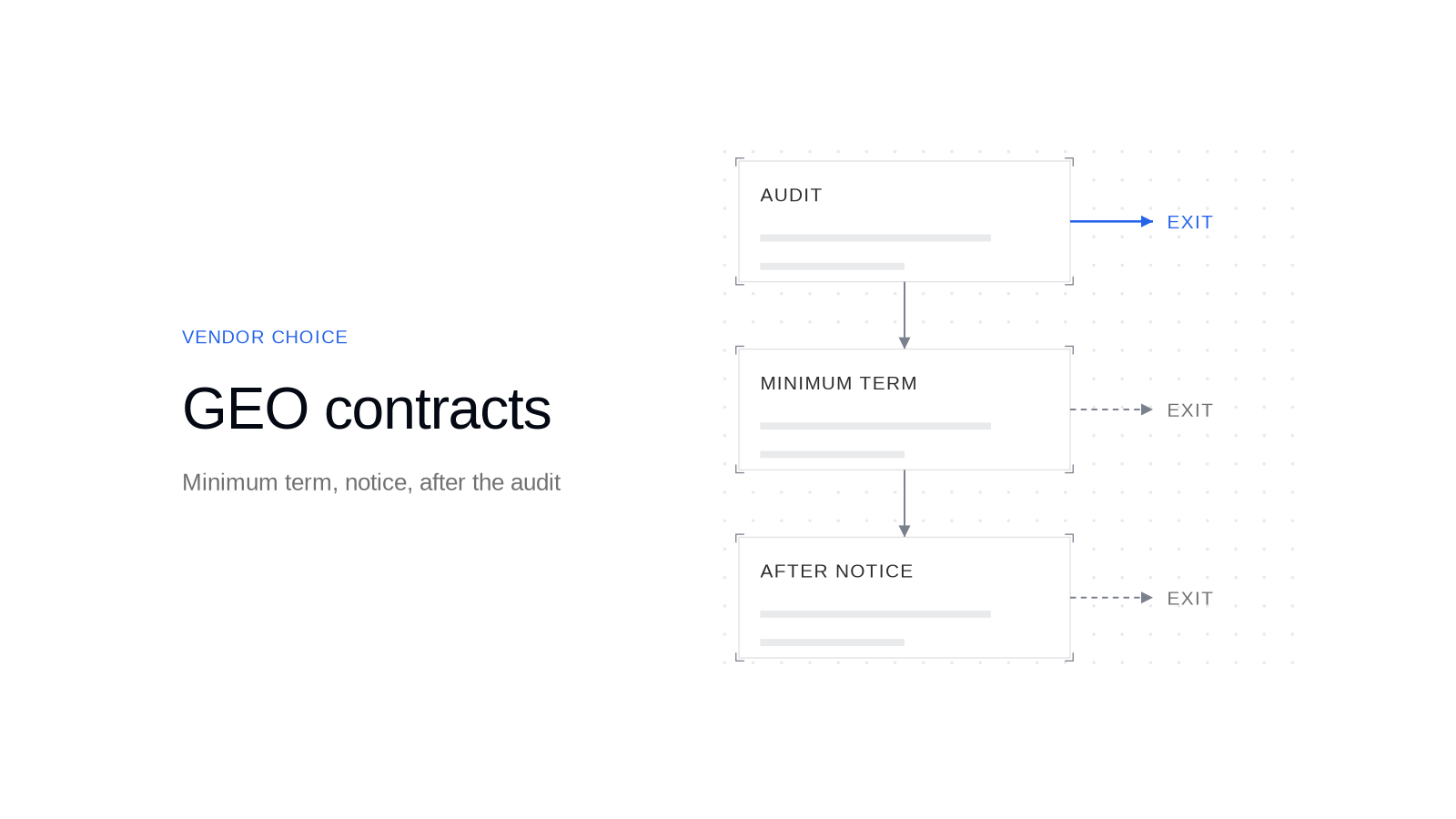
scaile starts the same way: one product in one market, then the rollout to further products once results show. A week-by-week plan is in where to start with GEO, and what a first contract should include in GEO pilot.
When to shift more of the budget to GEO
Shift budget when your own numbers move, in steps of 5 to 10 points, once a quarter. Each signal below changes one line, never the whole split at once.
Sessions from AI assistants in GA4 grow quarter over quarter on the pages you changed. In Conductor’s benchmarks, 87.4% of AI referral traffic comes from ChatGPT, so start there. [2] Move points to the GEO line.
Your tracked questions name competitors far more often than you. Move money into pages and outside sources for those questions.
The evidence points both ways. Semrush found the average AI search visitor 4.4 times as valuable as a traditional organic visitor, based on conversion rate. [5] Adobe found generative AI traffic to U.S. retail sites 9 percent less likely to convert than other traffic, improved from 43 percent in July 2024. [6] Check your own rate before you move money for it.
Keep the SEO line where it is. The base still brings most of your visits.
Do not add money. Fix the pages or the questions first.

How to show leadership the split is working
Show each budget line next to the numbers it was meant to move, in one report per quarter. Leadership approves the next shift when it sees which line earned it.
- Shared base and SEO: clicks, rankings and conversions from Search Console and GA4. Google counts AI Overviews and AI Mode inside the overall search traffic in Search Console, under the Web search type, so they have no line of their own. [1]
- GEO: how often answers to your tracked questions name you, and how often they cite you. Bing Webmaster Tools’ AI Performance report shows how often your content is cited in generative answers, which URLs and how that changes over time. [7]
- Visits and enquiries from AI assistants: GA4 sessions from AI referrers and the leads they bring. The setup is in how to measure GEO ROI.
- The decision: which line gets more next quarter, and the signal behind it.
For the first budget request itself, the one-page format is in GEO business case.
What scaile delivers
scaile does SEO and GEO as one package, so your split is one plan, not two vendors pulling in different directions. The scaile platform connects Bing Webmaster Tools, Google Search Console and GA4 with scaile’s own prompt tracking, so the quarterly report above sits in one place.
scaile tracks your buyer questions in ChatGPT, Gemini, Perplexity, Claude, Copilot, Google AI Mode and Google AI Overviews.
You getThe GEO numbers for every quarterly review of the splitA scaile strategist builds the plan from your AI visibility, search and analytics data; scaile executes, and your team approves every step, with weekly calls.
You getOne split that your SEO agency and scaile both work toscaile takes over SEO, AI search and content, from strategy and research to publishing, monitoring and reporting.
You getOne budget and one plan for Google and AI answers, run by one partnerBuilding Radar doubled its qualified inbound pipeline within 90 days, without growing the marketing team.
A defensible split starts from one shared base, gives GEO a share sized by your buyers, and moves only when your own numbers move. If you want a strategist to set that split with your team and scaile to do the work, talk to scaile about Strategy with you.
FAQ
Can our SEO agency keep its budget if we add GEO?
Yes. scaile runs alongside the SEO agency a company already has and publishes into its CMS. The agency keeps the shared base and the SEO line, and you agree before the quarter who owns which task.
Can a small business start GEO without new money?
Partly. The shared base already counts for AI answers, so the first step is moving a small share into a baseline of your buyer questions and a few pages for the ones you lose.
Does paid search belong in this split?
No. Keep paid search as its own line. If it shrinks because pages win organically, the money saved can go into GEO. This split covers organic work, where one page can earn both a ranking and a place in AI answers.
Sources
- AI Features and Your Website | Google Search Central | Documentation | Google for Developers
- The 2026 AEO / GEO Benchmarks Report
- Do people click on links in Google AI summaries? | Pew Research Center
- AI Overviews Reduce Clicks by 34.5%
- We Studied the Impact of AI Search on SEO Traffic | Our Findings
- Adobe Analytics: Traffic to U.S. Retail Websites from Generative AI Sources Jumps 1,200 Percent | Adobe Blog
- Introducing AI Performance in Bing Webmaster Tools Public Preview |…